
What Is a Plunge Router and Why Every Woodworker Needs One
A plunge router is one of the most versatile and essential tools in modern woodworking. Whether you’re a beginner building small DIY furniture or a professional crafting detailed cabinetry, a plunge router can transform how you shape, cut, and detail wood. Unlike fixed-base routers, a plunge router gives you precise control over cutting depth while the motor is running — allowing for advanced routing techniques like inlays, grooves, mortises, and patterns.
In simple terms, a plunge router allows the bit to “plunge” straight into the material from above, rather than starting from the edge. This unique motion makes it the go-to tool for creating clean internal cuts, precision grooves, and decorative designs that are impossible with a fixed router alone.
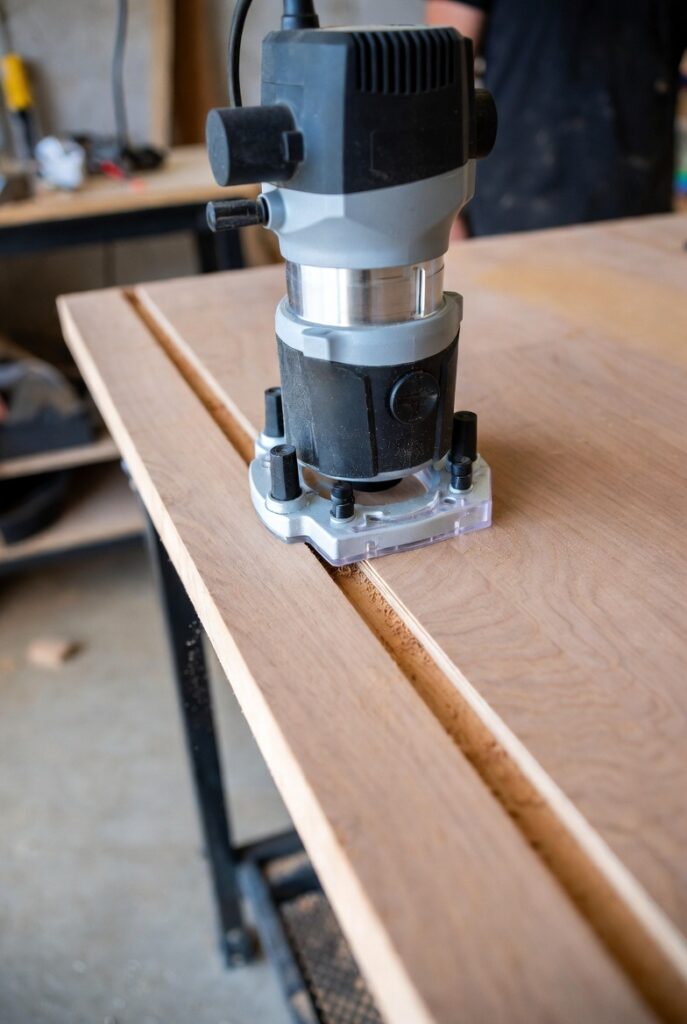
Understanding the Difference: Plunge Router vs. Fixed-Base Router
Before investing in a plunge router, it’s important to understand how it differs from a fixed-base router, since both are popular choices in woodworking.
| Feature | Plunge Router | Fixed-Base Router |
|---|---|---|
| Cutting Style | Bit plunges vertically into the material | Bit starts cutting from the edge |
| Depth Adjustment | Adjustable during operation | Fixed depth before cutting |
| Precision | Excellent for variable-depth cuts | Ideal for edge trimming |
| Best For | Grooves, mortises, inlays, detailed work | Shaping edges and bevels |
| Ease of Use | Slight learning curve | Simpler for beginners |
In short:
A plunge router gives you greater versatility and control, especially when you need to make cuts in the middle of a workpiece. It’s ideal for professional-grade woodworking, cabinetry, and precision carpentry.
How a Plunge Router Works
A plunge router consists of a motor housing mounted on spring-loaded posts. When you press the handles, the motor and bit move downward (“plunge”) into the work surface. You can then lock it at a desired depth, make your cut, and release the spring tension to bring the bit back up safely.
Here’s a simplified breakdown of its main components:
| Component | Function |
|---|---|
| Base Plate | Stabilizes the router against the work surface. |
| Motor Housing | Powers the cutting bit with variable speed control. |
| Plunge Posts/Springs | Allow vertical movement for controlled cuts. |
| Depth Stop / Turret | Sets maximum plunge depth for precision work. |
| Collet & Bit | Holds the router bit securely during operation. |
This plunge mechanism allows for controlled entry cuts — reducing splintering and improving accuracy. It’s especially useful for cutting mortises, dadoes, and grooves inside panels without starting from an edge.
Why the Plunge Router Is a Must-Have Tool
Let’s look at why so many woodworkers prefer a plunge router over other types:
- Precision Control:
You can start cutting anywhere on the board — perfect for creating slots or patterns inside a workpiece. - Depth Accuracy:
Fine-tune your cutting depth mid-operation using micro-adjustment knobs, ensuring repeatable and consistent results. - Versatility:
A plunge router can handle a variety of tasks — mortising hinges, engraving signs, template routing, or edge shaping when combined with a guide. - Safety:
Since the bit retracts when not in use, plunge routers are safer than fixed routers when performing deep or repetitive cuts. - Professional Finish:
The plunge mechanism ensures clean starts and stops, minimizing burn marks and chatter on your wood.
Example Use Case:
Imagine you’re installing door hinges or carving a recess for an inlay — a plunge router allows you to position the bit exactly where you need it and plunge down smoothly to your desired depth, producing flawless results in seconds.
When to Use a Plunge Router
A plunge router is ideal for projects that require:
- Mortises or slots for joints (such as mortise and tenon joinery)
- Template or pattern routing where accuracy is critical
- Sign making or detailed engraving
- Inlay and recess cutting
- Dadoes and grooves in furniture or cabinetry
- Surface trimming when combined with a guide or fence
Pro Tip:
If you frequently work with templates or jigs, a plunge router’s adjustable depth and smooth vertical movement make it far easier to follow complex designs accurately.
Advantages and Limitations of Using a Plunge Router
To fully appreciate whether a plunge router suits your workshop, it’s essential to consider both its strengths and potential drawbacks.
| Advantages | Limitations |
|---|---|
| Adjustable depth during operation | Slightly heavier than fixed routers |
| Suitable for interior cuts and grooves | More expensive |
| Safer retraction mechanism | Requires practice to master plunge motion |
| Versatile for detailed woodworking | Some models have limited visibility around bit |
| Great for professional applications | Can feel bulky for delicate edge trimming |
Bottom Line:
If precision, flexibility, and control are your top priorities, the plunge router is the best choice. It offers unmatched accuracy for complex woodworking projects that demand fine control over cutting depth and entry position.
A Quick History: Evolution of the Plunge Router
The plunge router has evolved from early hand routers and fixed-base models. Initially, woodworkers used manual routers (often called router planes) to hollow out surfaces. Over time, electric routers emerged, and the plunge design revolutionized the process by allowing dynamic cutting depths without stopping the tool.
Today’s modern plunge routers — from brands like Bosch, Makita, DeWalt, and Triton — include:
- Variable speed motors
- Soft-start technology
- Electronic feedback control
- Dust collection ports
- LED lights for better visibility
These innovations have made the plunge router an indispensable tool for precision woodworking.
Quote from a Professional Woodworker
“The plunge router gives me control I can’t get with any other power tool. Whether I’m cutting dovetail sockets or hollowing out a recess for an inlay, I know every cut will start and stop exactly where I need it.”
— Daniel Woods, Master Carpenter, Fine Woodworking Journal
Summary: Why a Plunge Router Belongs in Every Workshop
A plunge router is the ultimate balance between power and precision. It allows you to:
- Cut intricate designs and patterns,
- Adjust depths mid-cut,
- Work safely on complex joinery, and
- Achieve professional-grade finishes with minimal effort.
Whether you’re upgrading your tools or just starting, investing in a quality plunge router can elevate your woodworking to the next level — both in accuracy and creativity.
Types of Plunge Routers and Their Key Features
Not all plunge routers are the same. They come in a variety of sizes, power ratings, and designs, each catering to a specific type of woodworking task. Choosing the right type depends on what you plan to do — from light decorative carving to heavy-duty joinery.
In this section, we’ll explore the main types of plunge routers, their key features, and which kind of user each one suits best.
1. Compact (Palm-Sized) Plunge Routers
Compact plunge routers, also known as trim routers or palm routers, are lightweight, portable, and ideal for detailed or delicate work. Despite their small size, they can perform a surprising range of tasks — especially if equipped with a plunge base attachment.
Key Features:
- Power output between 1 to 1.25 HP
- Weighs around 3–5 pounds
- Cutting depth up to 1.5 inches
- Often includes variable speed control
- Great for edge trimming, sign making, and light template routing
Best For:
- DIYers and hobbyists
- Small-scale woodworking projects
- Edge finishing and rounding
Example Models:
- Makita RT0701CX7 Compact Router Kit
- Bosch Colt PR20EVS with Plunge Base
- DeWalt DWP611PK Compact Router Combo Kit
Pro Tip:
If portability and precision are priorities, a compact plunge router is perfect. It’s also easier to control, making it ideal for beginners learning to route for the first time.
2. Mid-Sized Plunge Routers
Mid-sized plunge routers are the most versatile and popular choice among woodworkers. They balance power, precision, and weight — making them suitable for both general woodworking and professional applications.
Key Features:
- Power output between 1.75 HP and 2.25 HP
- Variable speed (10,000–25,000 RPM)
- Plunge depth up to 2.5 inches
- Accepts both 1/4-inch and 1/2-inch collets
- Compatible with a wide range of bits and jigs
Best For:
- Furniture making and cabinetry
- Mortising and groove cutting
- Joinery and edge profiling
Example Models:
- Bosch 1617EVSPK 2.25 HP Plunge & Fixed Base Router Combo
- DeWalt DW618PK 2.25 HP Variable Speed Plunge Router
- Makita RP1800 3¼ HP Plunge Router
Why It’s Popular:
This category offers enough power for 90% of woodworking tasks without being too bulky. It’s the sweet spot between a compact router’s precision and a heavy-duty model’s power.
3. Heavy-Duty Plunge Routers
When it comes to professional joinery, hardwood shaping, or deep mortising, heavy-duty plunge routers reign supreme. These machines are built for continuous use and deep cutting, often featuring advanced controls and rugged construction.
Key Features:
- Power output between 2.5 HP and 3.5 HP
- Weighs 10–15 pounds
- Plunge depth up to 3 inches or more
- Often includes soft-start motors and electronic feedback control
- Built for precision at high torque
Best For:
- Professional workshops
- Cutting mortises, dovetails, and grooves in hardwood
- Heavy stock removal and deep plunges
Example Models:
- Triton TRA001 3.25 HP Dual Mode Plunge Router
- Festool OF 2200 EB Router (3.25 HP)
- Makita RP2301FC 3.25 HP Plunge Router
Pro Tip:
If you’re working on large projects like cabinetry, doors, or staircases, a heavy-duty plunge router provides the torque and stability needed for deep and consistent cuts — even through dense hardwood.
4. Dual-Mode (Fixed and Plunge) Routers
Dual-mode routers combine the best of both worlds — functioning as a fixed-base and plunge router in one tool. This versatility allows users to quickly switch between edge routing and plunge cuts without changing machines.
Key Features:
- Convertible between fixed-base and plunge modes
- Adjustable plunge depth stop
- Ideal for versatile tasks and mixed project types
- Typically 1.75–2.25 HP
Best For:
- Users who perform both edge trimming and internal cuts
- Workshops with limited tool space
- Intermediate woodworkers seeking all-in-one flexibility
Example Models:
- Triton MOF001 2.25 HP Dual-Mode Router
- DeWalt DW618PKB Combo Kit
- Bosch 1617EVSPK Router Combo Kit
Why It’s Worth It:
A dual-mode router saves money and space while offering flexibility for nearly every woodworking task — from fine detail trimming to heavy plunging.
5. CNC-Compatible Plunge Routers
With the rise of computer-controlled woodworking, CNC-compatible plunge routers are becoming more common. These routers can be mounted to CNC tables or jigs for automated precision cutting.
Key Features:
- High RPM precision motors
- Electronic variable speed control
- Compatibility with CNC clamps and tables
- Excellent for repeatable patterns or mass production
Best For:
- Professional workshops and production settings
- Sign making, 3D carving, and automated milling
- High-volume woodworking
Example Models:
- Makita RT0701C with CNC Mount Kit
- DeWalt DWP611 with CNC Adapter Plate
- Bosch Colt GKF125CEN Professional Router
Pro Tip:
If you plan to expand into automated woodworking, invest in a CNC-compatible plunge router. It offers unmatched precision for detailed carving and professional manufacturing.
Comparison Table: Types of Plunge Routers
| Type | Power (HP) | Weight | Plunge Depth | Best For | Example Models |
|---|---|---|---|---|---|
| Compact | 1.0–1.25 | 3–5 lbs | 1.5″ | Detail work, trimming | Makita RT0701CX7, Bosch PR20EVS |
| Mid-Sized | 1.75–2.25 | 7–9 lbs | 2.5″ | Furniture, cabinetry | Bosch 1617EVSPK, DeWalt DW618PK |
| Heavy-Duty | 2.5–3.5 | 10–15 lbs | 3″+ | Hardwood joinery | Festool OF 2200, Triton TRA001 |
| Dual-Mode | 1.75–2.25 | 8–10 lbs | 2.5″ | Mixed use | Triton MOF001, Bosch 1617EVSPK |
| CNC-Compatible | 1.25–2.25 | Varies | Custom | Automated work | Makita RT0701C, DeWalt DWP611 |
Important Specifications to Consider
When comparing plunge routers, pay close attention to these key specifications, as they directly affect performance and usability:
- Horsepower (HP): Determines cutting power. For most tasks, 2–2.25 HP is ideal.
- Plunge Depth: A deeper plunge (2.5″–3″) allows for thicker materials.
- Collet Size: 1/2-inch collets offer more stability than 1/4-inch ones.
- Variable Speed Control: Adjust RPM for different wood types.
- Soft-Start Motor: Prevents jerky starts and improves safety.
- Electronic Feedback: Maintains constant speed under load.
- Dust Collection Port: Keeps work area clean and improves visibility.
Which Type of Plunge Router Is Right for You?
- Beginners or Hobbyists: Compact routers are perfect for light projects and learning.
- Intermediate Woodworkers: Mid-sized plunge routers offer balance and power.
- Professionals: Heavy-duty or dual-mode routers handle any task efficiently.
- CNC Enthusiasts: CNC-compatible plunge routers provide automated precision.
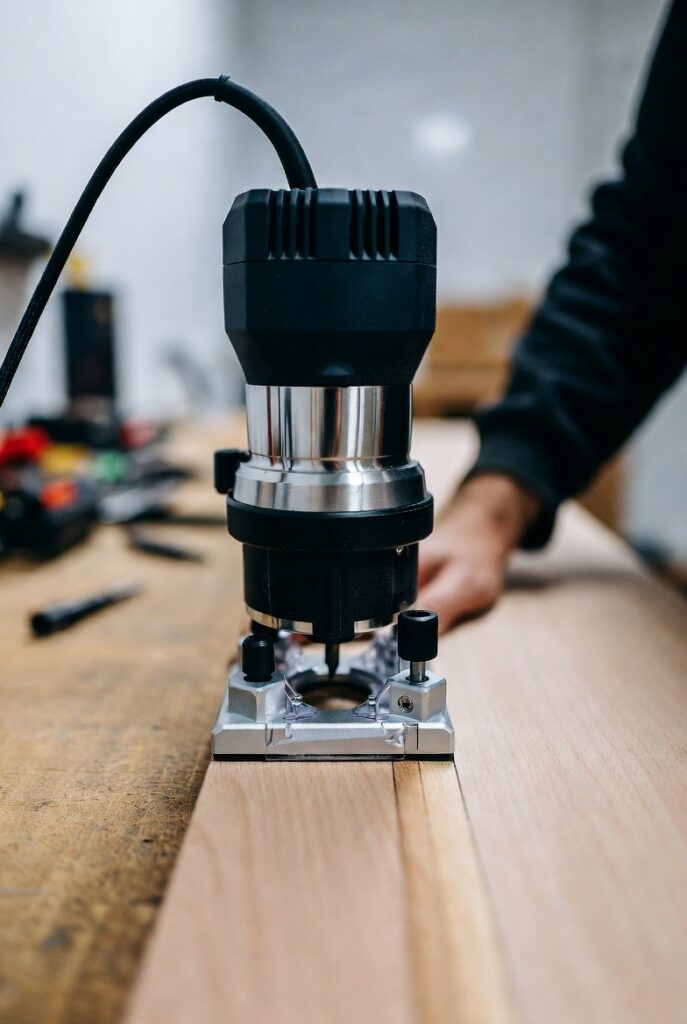
Summary: The Right Plunge Router Makes All the Difference
The type of plunge router you choose defines your woodworking experience.
If you want a versatile, long-lasting, and precise cutting tool — choose one that matches your skill level, project scale, and desired accuracy.
A compact router can perfect edges, a mid-sized one can handle cabinetry, and a heavy-duty model can power through hardwood. By understanding these distinctions, you can confidently pick the best plunge router for your workshop and projects.
Essential Features to Look for in the Best Plunge Router
When investing in the best plunge router, understanding its key features is crucial. The right combination of power, precision, and safety features can make all the difference between a frustrating tool and a perfect woodworking companion. Whether you’re a DIY enthusiast or a professional carpenter, knowing what to look for in a plunge router ensures you get a machine that performs efficiently and lasts for years.
Below, we break down the essential features every woodworker should consider before buying a plunge router.
1. Motor Power (Horsepower and Amperage)
The motor power of a plunge router determines how easily it can cut through various materials. Routers typically range from 1 HP for light tasks to 3.5 HP for heavy-duty work.
| Router Type | Horsepower Range | Best For |
|---|---|---|
| Compact / Palm | 1 – 1.25 HP | Edge trimming, light routing |
| Mid-Sized | 1.75 – 2.25 HP | General woodworking, cabinetry |
| Heavy-Duty | 2.5 – 3.5 HP | Hardwood routing, deep cuts |
Pro Tip:
If you plan to work with hardwoods like oak or maple, or do a lot of deep cutting, look for a plunge router with at least 2.25 HP and a 12-amp motor for consistent torque and smooth performance.
2. Plunge Depth and Depth Stop Accuracy
The defining feature of a plunge router is its ability to move vertically into the material — allowing you to start cuts in the middle of a board rather than just at the edge.
Key specifications to note:
- Plunge range: Typically 2 to 3 inches
- Depth stop turret: Allows setting multiple preset depths
- Micro-adjustment knobs: For fine-tuning the plunge depth
A precise plunge depth mechanism is essential for joinery, mortising, and inlay work. Routers like the Makita RP2301FC and Bosch 1619EVS have micro-depth adjusters that make it easy to achieve exact cutting depths within 1/64 of an inch.
Pro Tip:
Choose a router with a smooth, spring-loaded plunge system. Jerky plunges can ruin your work surface and compromise precision.
3. Variable Speed Control
Different woods and router bits require different speeds. A variable speed control dial lets you adjust the RPM (rotations per minute) to match your cutting task.
| Material Type | Recommended RPM Range |
|---|---|
| Softwood (Pine, Cedar) | 20,000 – 25,000 RPM |
| Hardwood (Oak, Maple) | 16,000 – 20,000 RPM |
| Plastic or Acrylic | 10,000 – 14,000 RPM |
| MDF or Particleboard | 18,000 – 22,000 RPM |
Why it matters:
A plunge router with variable speed helps prevent burn marks, tear-out, and bit breakage, especially when working with large-diameter bits.
Example:
The DeWalt DW625 features an electronic variable speed control from 8,000 to 24,000 RPM, allowing smooth, controlled cuts across multiple materials.
4. Soft Start and Electronic Feedback
A soft-start feature gradually increases the router’s speed when powered on, preventing the tool from jerking in your hands. This not only improves safety but also extends motor life.
Electronic feedback control is another premium feature — it maintains a constant speed even under load, ensuring consistent cutting performance.
Example:
The Festool OF 1400 EQ Plunge Router combines both features, delivering powerful yet stable routing even when cutting dense hardwoods.
5. Ergonomic Design and Handling
A plunge router should feel comfortable and balanced in your hands, especially during long woodworking sessions. Look for models with:
- Rubberized grips to reduce vibration
- Well-balanced motor placement for better control
- Accessible plunge lock lever for quick locking
- Clear base plates for improved visibility
Bonus Tip:
If you’re a beginner, prioritize routers with lightweight builds (under 10 lbs) and dual handles for stability. Ergonomics directly affect accuracy and safety.
6. Collet Size and Bit Compatibility
Most plunge routers support 1/4-inch and 1/2-inch collets — the metal sleeves that hold your router bits.
Why it matters:
- 1/2-inch collets provide better grip and less vibration, ideal for heavy-duty cuts.
- 1/4-inch collets are compatible with smaller, detail-oriented bits.
If you plan on using a wide range of bits, choose a router that supports both collet sizes, like the Bosch 1617EVSPK or Triton MOF001.
7. Dust Collection System
Routing generates a lot of sawdust, especially during deep plunges. A built-in dust collection port or adapter keeps your workspace clean and protects your lungs from harmful particles.
Benefits of effective dust collection:
- Clearer line of sight for precision
- Reduced cleanup time
- Improved air quality
- Extended router bit lifespan
Many high-end models, such as the Festool OF 2200 EB, feature integrated dust ports that connect directly to a vacuum system for near-dustless operation.
8. Base Plate and Visibility
A transparent base plate allows you to see the bit and cutting line clearly. Look for:
- LED lighting for low-light conditions
- Large base area for better stability
- Centering guide marks for accuracy
Some routers, like the DeWalt DWP611PK, even include dual LEDs and a clear sub-base that enhances visibility during intricate routing work.
9. Build Quality and Durability
Durability is one of the most important factors when choosing the best plunge router. You want a machine that can handle daily use and resist wear over time.
Look for:
- Aluminum or magnesium housing for lightweight strength
- High-quality bearings for smoother operation
- Secure locking mechanisms to prevent accidental slippage
Example:
The Makita RP1800 features linear ball bearings that deliver smooth plunging action and long-term reliability — a benchmark of professional-grade build quality.
10. Additional Accessories and Compatibility
Many plunge routers offer optional accessories that increase precision and versatility, such as:
- Edge guides for straight cuts
- Template guides for pattern routing
- Router tables for stationary use
- CNC mounts for automation
When choosing a plunge router, check whether the manufacturer provides compatible accessories or third-party add-ons — this can greatly expand the tool’s usefulness.
Quick Checklist: Features of the Best Plunge Router
| Feature | Why It’s Important |
|---|---|
| High motor power (2+ HP) | Handles hardwoods and deep cuts |
| Variable speed control | Prevents burning and tear-out |
| Soft start + feedback | Ensures safety and consistent speed |
| Depth stop accuracy | Allows repeatable cuts |
| Ergonomic handles | Improves comfort and control |
| 1/2-inch collet | Offers better stability |
| Dust collection port | Keeps work area clean |
| LED lights & clear base | Improves visibility |
| Strong housing | Extends tool life |
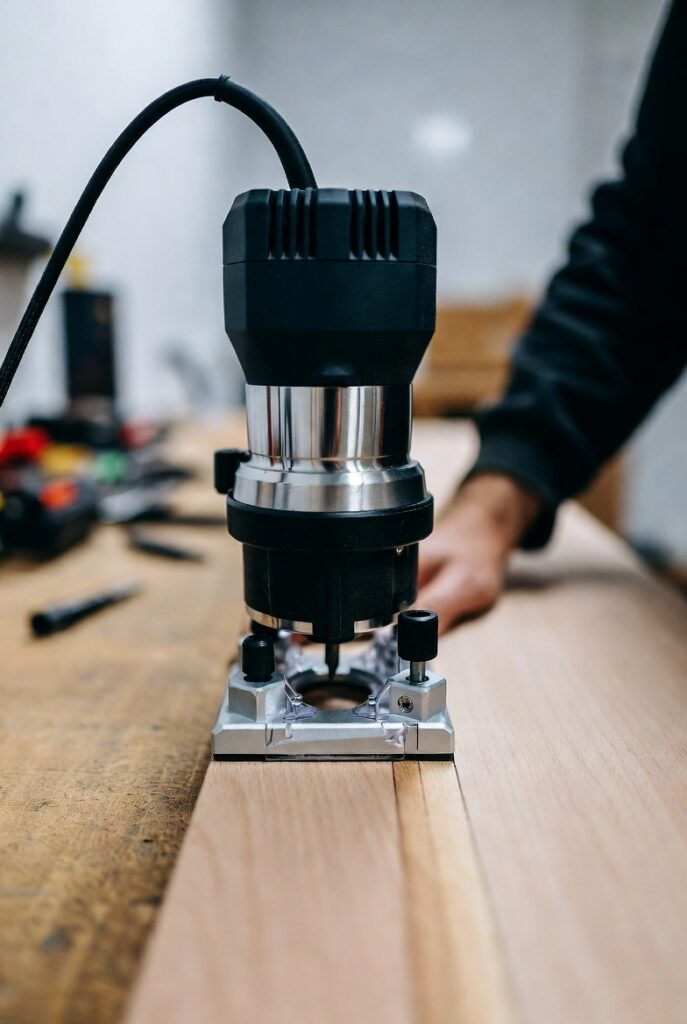
Summary: Quality Features Define the Best Plunge Router
A plunge router is only as good as its features. From motor strength and depth control to safety and comfort, every detail matters. Investing in a router with variable speed, soft start, durable construction, and excellent dust management will not only improve your woodworking results but also make your work safer and more enjoyable.
Remember, the best plunge router isn’t always the most expensive — it’s the one that fits your specific needs, skill level, and type of projects.
Comparing the Best Plunge Router Brands and Models
Choosing the best plunge router means understanding the leading brands and what sets their models apart. Top manufacturers like Makita, Bosch, DeWalt, Triton, and Festool dominate the market, each offering unique advantages in power, precision, and usability.
Below, we’ll compare these top brands and highlight their standout plunge router models — helping you find the ideal fit for your woodworking needs.
1. Makita Plunge Routers
Makita is known for combining power, reliability, and smooth operation. Their plunge routers often feature precision-engineered motors, soft-start technology, and superior plunge depth accuracy.
Top Models:
- Makita RP2301FC (3.25 HP): Heavy-duty router ideal for professionals. Features electronic speed control, smooth plunge mechanism, and LED lighting.
- Makita RT0701CX7 (1.25 HP Compact Router Kit): A smaller, versatile option with both fixed and plunge bases. Great for beginners and trim work.
Why Woodworkers Love Makita:
- Smooth and quiet motor operation
- Excellent dust collection system
- Durable aluminum housing
- Ergonomic rubberized handles
Best For:
Woodworkers who value precision, long tool life, and professional-grade performance.
2. Bosch Plunge Routers
Bosch plunge routers are popular for their versatility and precision. They’re often sold as combo kits, allowing users to switch between plunge and fixed bases easily. Bosch routers are also widely compatible with router tables, making them perfect for multi-purpose use.
Top Models:
- Bosch 1617EVSPK (2.25 HP): One of the most beloved plunge routers. Features variable speed, constant response circuitry, and both plunge and fixed bases.
- Bosch 1619EVS (3.25 HP): Designed for professional use, offering an incredible 3-inch plunge depth and precise micro-adjustments.
Bosch Strengths:
- Dual-base versatility (plunge + fixed)
- Accurate micro-depth adjustments
- Powerful, smooth performance
- Constant response circuitry maintains consistent RPM
Best For:
Woodworkers who want a router that can do everything — from trimming edges to deep cuts — with high accuracy.
3. DeWalt Plunge Routers
DeWalt plunge routers are well-known for their rugged design, durability, and powerful motors. Their ergonomic focus and electronic features make them great for extended use without fatigue.
Top Models:
- DeWalt DW618PK (2.25 HP): A well-balanced combo router kit with smooth plunge action, soft start, and dust-sealed switch for durability.
- DeWalt DW625 (3 HP): Heavy-duty model ideal for hardwood and deep plunge cuts. Features electronic variable speed and a 3-inch plunge range.
DeWalt Advantages:
- Strong motor performance
- Precise depth adjustments with micro-fine controls
- Ergonomic design for comfortable use
- Reliable build for jobsite conditions
Best For:
Contractors and professional woodworkers who need a tough, long-lasting plunge router capable of handling demanding tasks.
4. Triton Plunge Routers
Triton plunge routers are unique for their dual-mode operation — they can function as both plunge and fixed-base routers. They’re also designed for easy bit changes from above a router table, making them ideal for integrated workshop setups.
Top Models:
- Triton TRA001 (3.25 HP): Heavy-duty router with automatic spindle lock, micro winder for precise depth control, and easy above-table bit changes.
- Triton MOF001 (2.25 HP): Mid-sized dual-mode router offering excellent value and power.
Triton Benefits:
- Dual-mode flexibility (plunge and fixed)
- Above-table bit change capability
- Micro-depth adjustment system
- Safety-focused design
Best For:
Woodworkers who want maximum versatility and frequently use router tables for stationary work.
5. Festool Plunge Routers
Festool represents the premium segment of plunge routers — known for exceptional precision, build quality, and dust extraction. These routers are engineered for professionals who demand flawless performance and long-term reliability.
Top Models:
- Festool OF 1400 EQ (2.25 HP): Extremely smooth operation, superior dust extraction, and precise depth control.
- Festool OF 2200 EB (3.25 HP): One of the most powerful plunge routers available, built for intensive, precision work.
Why Festool Excels:
- Outstanding dust extraction efficiency
- Feather-smooth plunge action
- Top-tier precision and stability
- High-quality components engineered in Germany
Best For:
Professional cabinetmakers, furniture builders, and precision-focused woodworkers who want the ultimate plunge router experience.
Brand Comparison Chart: Best Plunge Router Models
| Brand | Top Model | Horsepower | Plunge Depth | Special Feature | Best For |
|---|---|---|---|---|---|
| Makita | RP2301FC | 3.25 HP | 2.75″ | LED lights, electronic speed control | Precision + durability |
| Bosch | 1617EVSPK | 2.25 HP | 2.5″ | Dual-base versatility | All-purpose routing |
| DeWalt | DW625 | 3.0 HP | 3″ | Soft start, deep cuts | Heavy-duty routing |
| Triton | TRA001 | 3.25 HP | 3″ | Dual-mode, table compatible | Professional + table use |
| Festool | OF 2200 EB | 3.25 HP | 3″ | Dust-free precision | Premium performance |
6. Honorable Mentions: Other Reliable Plunge Routers
- Ryobi R1631K: Budget-friendly option for beginners with 1.5 HP motor.
- Hitachi (Metabo HPT) M12VE: Smooth performance with soft-start and variable speed.
- Craftsman 27683: Excellent entry-level plunge router for light woodworking.
These models may not rival Festool or Triton in raw performance, but they provide solid results for hobbyists or DIY-level projects.
7. Key Takeaways: Finding the Best Plunge Router Brand
Each major brand caters to a specific kind of user:
| User Type | Recommended Brand | Why |
|---|---|---|
| Beginner / Hobbyist | Makita, Ryobi | Easy to use, lightweight, affordable |
| Intermediate Woodworker | Bosch, DeWalt | Versatile, precise, and durable |
| Professional Carpenter | Triton, Festool | Advanced features, accuracy, power |
| Router Table User | Triton, Bosch | Dual-mode and easy above-table adjustments |
| Precision-Focused Woodworker | Festool, Makita | Smooth operation and fine depth control |
Summary: Choosing the Right Plunge Router Brand
When selecting the best plunge router, it’s important to balance performance, precision, and usability.
- Makita shines in reliability and ergonomics.
- Bosch stands out for its all-round versatility.
- DeWalt impresses with power and durability.
- Triton dominates in dual-mode flexibility and table compatibility.
- Festool leads in absolute precision and professional craftsmanship.
No matter your experience level, the right plunge router will transform your woodworking projects — giving you cleaner cuts, faster results, and a more enjoyable workshop experience.
How to Use a Plunge Router Safely and Effectively
A plunge router is a powerful woodworking tool, but without proper technique and safety measures, it can be dangerous. Knowing how to use a plunge router effectively not only improves your results but also keeps you safe. This section provides a comprehensive guide to mastering the tool while protecting yourself and your workpiece.
1. Essential Safety Gear
Before turning on your plunge router, make sure you’re wearing the correct safety gear:
- Safety Glasses: Protect your eyes from flying wood chips.
- Hearing Protection: Routers can be loud, especially heavy-duty models.
- Dust Mask or Respirator: Fine sawdust can be hazardous when inhaled.
- Gloves: Optional; some woodworkers prefer working without gloves for better grip.
- Secure Clothing: Avoid loose sleeves or jewelry that could catch in the router.
Pro Tip:
A well-lit workspace and clean, unobstructed work surface reduce accidents significantly.
2. Preparing Your Workpiece
Proper preparation ensures precise cuts and prevents mistakes:
- Clamp the Wood: Always secure your workpiece using clamps or a workbench with a non-slip surface.
- Mark Your Cut Lines: Use a pencil, ruler, or template to outline exact routing paths.
- Check the Bit: Ensure your router bit is sharp, clean, and securely tightened in the collet.
Pro Tip:
If using a template or guide, double-check alignment before plunging the bit into the wood. This helps avoid errors and reduces material waste.
3. Setting Up Your Plunge Router
Before making any cuts, set up your router properly:
- Install the Router Bit: Insert the bit into the collet and tighten firmly using the supplied wrench.
- Adjust Plunge Depth: Use the depth stop or micro-adjustment knob to set the maximum cutting depth.
- Set Speed: Adjust variable speed according to wood type and bit size. Lower RPM for larger bits and harder wood; higher RPM for smaller bits and softwood.
- Check Stability: Make sure the base is flat against the workpiece and that handles are secure.
Example:
For a 3/4-inch groove in oak, set the plunge depth to 3/4 inch and use a slower speed (~16,000 RPM) to avoid burning.
4. Plunge Router Operation Techniques
Using a plunge router properly requires correct technique:
- Start With the Bit Above the Workpiece: Ensure the router is not engaged when placing it on the material.
- Plunge Smoothly: Press both handles downward slowly, letting the spring mechanism guide the bit into the wood.
- Lock the Depth: Once the desired depth is reached, lock the plunge so it maintains a consistent cutting depth.
- Move the Router Steadily: Guide the router along your line or template without forcing it. Let the bit do the cutting.
- Retract Slowly: After finishing the cut, release the plunge lock and allow the spring to raise the bit safely.
Pro Tip:
Always move the router against the rotation of the bit (conventional cutting) for maximum control and smoother edges.
5. Using Guides and Templates
Templates, edge guides, and router fences increase precision:
- Router Fences: Ideal for straight edge cuts and repeatable patterns.
- Edge Guides: Perfect for parallel grooves along an edge.
- Templates/Jigs: Allow complex shapes or repeated cuts without measuring each time.
Example:
Using a circle template with your plunge router allows you to cut perfect round inserts or tabletops with professional-level accuracy.
6. Tips for Safe and Effective Routing
- Start Shallow: For deep cuts, make multiple shallow passes instead of a single plunge.
- Feed Slowly: Avoid forcing the router; a slow and steady feed improves finish quality.
- Keep Both Hands on Handles: Ensures control during the plunge and while moving the router.
- Avoid Plunging on Knots or Hard Spots: This can damage the bit or router.
- Use Sharp Bits: Dull bits create tear-out and excessive heat.
Safety Reminder:
Never remove safety guards or bypass the plunge lock. These features protect both you and your workpiece.
7. Maintenance Tips for Your Plunge Router
Regular maintenance extends the life of your plunge router:
- Clean Dust Regularly: Use compressed air or a vacuum to remove sawdust from vents and motor housing.
- Lubricate Plunge Posts: Keeps the spring mechanism smooth and precise.
- Inspect Bits and Collets: Replace worn bits and check that collets are not stripped.
- Store Safely: Keep the router in a dry, clean location to prevent corrosion or damage.
8. Common Mistakes to Avoid
- Forcing the Router: Let the bit cut naturally. Forcing it can burn the wood or break the bit.
- Plunging Too Deep in One Pass: Multiple shallow passes produce cleaner results.
- Ignoring Dust Collection: Dust obscures your line and can be hazardous to health.
- Using Dull Bits: A sharp router bit is key to precision and safety.
- Skipping Safety Gear: Eye and hearing protection are non-negotiable.
Summary: Mastering Your Plunge Router
Using a plunge router safely and effectively combines proper setup, correct technique, and consistent attention to safety. By following these steps:
- Wear appropriate safety gear
- Clamp and mark your workpiece
- Set depth, speed, and guides carefully
- Plunge and feed smoothly and steadily
- Maintain your router regularly
…you ensure precise cuts, professional finishes, and safe operation.
With practice, the plunge router becomes an extension of your hands — giving you unmatched control over woodworking projects.