
What Is a Router Sled?
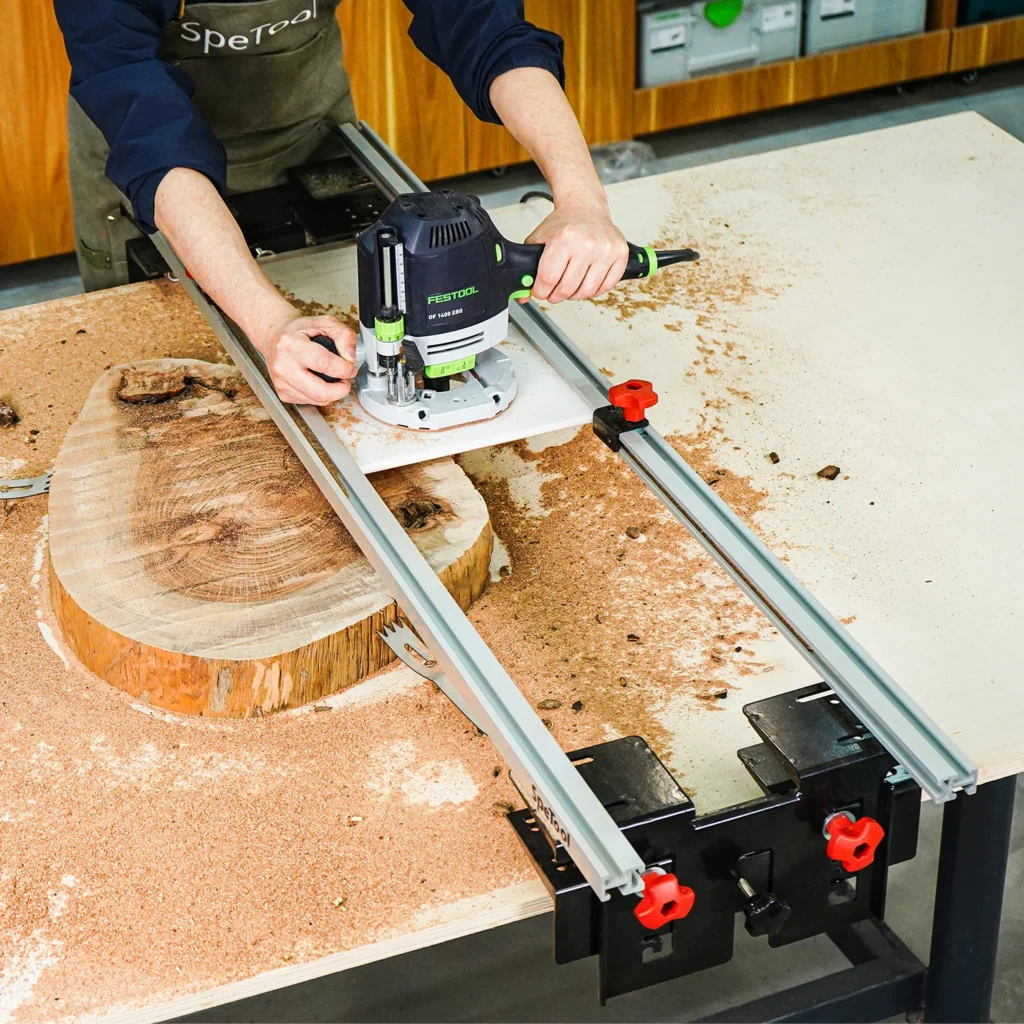
A router sled is a simple yet powerful jig used in woodworking to flatten large or uneven surfaces—most commonly live edge slabs, table tops, or epoxy resin pieces—that are too wide to fit through a traditional planer or jointer. At its core, a router sled works by allowing your router to move smoothly over the workpiece on a stable track, shaving down high spots until the entire surface is perfectly level.
Think of a router sled as a manual flattening system. Instead of feeding your slab into a machine, you move the router across the slab. This gives you incredible control, especially when working with irregular or expensive materials.
Here’s a simple breakdown of how it works:
| Component | Function |
|---|---|
| Rails | Provide a level path for the sled to ride on |
| Sled (or Carriage) | Holds the router and slides back and forth along the rails |
| Router & Bit | The cutting tool that removes material from the slab |
| Workpiece | The slab or board being flattened |
When assembled correctly, the router sled allows for precision leveling, even on slabs that are bowed, warped, or rough-cut. The result is a surface that’s smooth, flat, and ready for sanding or finishing.
Router Sled vs. Planer vs. Jointer
A common question woodworkers ask is: Why not just use a planer or jointer instead of a router sled?
Here’s a quick comparison:
| Tool | Best Use | Limitations |
|---|---|---|
| Planer | Thicknessing uniform boards | Can’t handle boards wider than the machine bed |
| Jointer | Flattening one face or edge | Not ideal for large slabs or irregular shapes |
| Router Sled | Flattening large slabs, live edges, epoxy tables | Slower but offers full control and size flexibility |
The router sled stands out for its versatility. You can flatten slabs up to several feet wide, something no standard planer can do without industrial-sized equipment.
💡 Pro Tip: Many custom furniture makers use router sleds for flattening live-edge walnut or maple slabs that can cost hundreds of dollars each. The precision and control help avoid costly mistakes and wasted material.
Why Every Woodworker Should Understand Router Sleds
Even if you already own a planer or CNC machine, a router sled is a valuable addition to your workshop. It’s inexpensive, easy to build, and adaptable to almost any project.
Here are some key advantages:
- ✅ Cost-effective – You can build a DIY router sled for less than $100.
- ✅ Highly versatile – Works on wood, resin, and even composite materials.
- ✅ Scalable – Can be adjusted to fit any slab size.
- ✅ Precise – Allows fine-tuned depth control for leveling uneven surfaces.
- ✅ Portable – Can be assembled or disassembled easily for small workshops.
Whether you’re flattening a live edge dining table or preparing a resin river slab, the router sled gives you full control over the flattening process—without the need for industrial machinery.
Key Takeaway
A router sled bridges the gap between hand tools and professional-grade machines. It’s the go-to solution for DIY woodworkers, custom furniture makers, and professional shops who need an affordable and reliable way to flatten large slabs.
Why Use a Router Sled?
Using a router sled isn’t just a clever DIY trick — it’s a cornerstone technique in modern woodworking, especially for anyone working with large slabs, epoxy river tables, or live edge furniture. Whether you’re a hobbyist or a professional, the router sled provides a level of control and precision that traditional machines can’t always match.
1. The Key Benefits of a Router Sled
When you use a router sled for flattening slabs, you gain a range of practical and financial advantages that make it one of the smartest additions to your workshop:
a. Flatten Large Slabs That Planers Can’t Handle
Most planers have a limited width capacity — usually around 12–13 inches for hobby-grade models. However, many slabs used for tables, benches, and countertops can easily exceed 24 inches or more. A router sled can be built to accommodate slabs of any size, meaning you’re no longer limited by your machine’s capacity.
💬 “The first time I used a DIY router sled on a 40-inch walnut slab, I realized I didn’t need a $2,000 planer,” says James H., custom furniture maker.
b. Precision and Control
With a router sled, you can control the depth of each pass precisely — often as fine as 1/32 of an inch. This means you remove just the right amount of material without wasting precious wood.
Planers and jointers are faster but less precise when it comes to subtle irregularities, especially on slabs with natural edges or uneven grain patterns.
c. Cost-Effective and Accessible
A professional slab flattening machine or industrial planer can cost thousands of dollars. By contrast, a DIY router sled can be built for under $100 using plywood, screws, and a standard router you may already own. This makes it a budget-friendly solution for woodworkers at any skill level.
d. Versatility Across Materials
Router sleds aren’t limited to hardwood. They can flatten:
- Epoxy resin slabs
- Reclaimed wood
- Composite boards
- End grain cutting boards
- Live edge wood
This versatility makes them an essential tool for custom table makers and resin artists alike.
e. Compact and Space-Saving
Unlike large planers or drum sanders, a router sled can be disassembled and stored away when not in use. Perfect for small workshops or garage setups where space is limited.
2. When to Use a Router Sled Instead of a Planer
| Project Type | Router Sled Recommended? | Reason |
|---|---|---|
| Large live edge slab | ✅ Yes | Planers can’t handle irregular shapes or widths |
| Epoxy river table | ✅ Yes | Planers may chip or damage epoxy |
| Reclaimed wood with metal pieces | ✅ Yes | Router sled allows safe, controlled cutting |
| Standard milled boards | ❌ No | Planer is faster and more efficient |
| Tabletop glue-ups | ✅ Yes | Ensures perfect flatness before sanding |
⚙️ Pro Tip: If your project combines materials — for example, wood and epoxy resin — always use a carbide-tipped flattening bit in your router sled to handle both materials evenly.
3. Real-World Use Cases for Router Sleds
Flattening Live Edge Slabs
Woodworkers often use router sleds to flatten walnut, oak, and maple live edge slabs used in custom dining tables. The sled keeps the slab stable, ensuring both sides are perfectly parallel.
Leveling Epoxy River Tables
Epoxy resin hardens differently than wood, often leaving raised or uneven spots. A router sled for epoxy slabs allows you to achieve a glass-smooth finish without sanding through the resin.
Reclaiming Old Wood
Router sleds are also popular for reclaimed wood projects, especially when the surface is warped or uneven. Instead of planing away too much material, the sled allows for slow, precise passes.
Workshop Case Study
In a 2023 survey by Woodworkers Journal, 68% of respondents said they used a router sled at least once per month for slab flattening or precision work. Among professionals, the number rose to 82%, reflecting the tool’s growing popularity in both hobby and commercial settings.
4. Router Sled Advantages at a Glance
| Benefit | Description |
|---|---|
| Unlimited Width | Can flatten slabs wider than any planer |
| Precision Control | Set exact cutting depth for minimal waste |
| Low Cost | Build your own for under $100 |
| Safe for Epoxy | Avoid planer tear-out or damage |
| Easy Maintenance | Minimal moving parts, easy to clean |
5. Drawbacks to Be Aware Of
While a router sled is an incredible tool, it’s not without limitations:
- Time-Consuming – Flattening a large slab can take 1–2 hours.
- Dust Management – Routers produce fine dust; a dust collection system is recommended.
- Surface Finish – Requires sanding after flattening for a perfectly smooth surface.
However, with proper setup and technique, these drawbacks are minor compared to the benefits.
Key Takeaway
A router sled is not just a workaround — it’s a professional-grade solution for flattening wide, uneven, or epoxy-filled slabs with unmatched precision. It empowers woodworkers to tackle projects that would otherwise require expensive industrial tools.
Types of Router Sleds
A router sled may look simple at first glance, but there are actually several designs and configurations that serve different woodworking needs. The right type of router sled for you depends on your workspace, project size, and budget. Whether you’re flattening a live edge slab, building a DIY router sled, or investing in a commercial router sled kit, understanding these options helps you achieve better results and avoid wasted time or material.
1. DIY Router Sleds
The DIY router sled is by far the most popular type, especially among hobbyists and small-shop woodworkers. It’s cost-effective, easy to build, and can be customized to fit your exact project dimensions.
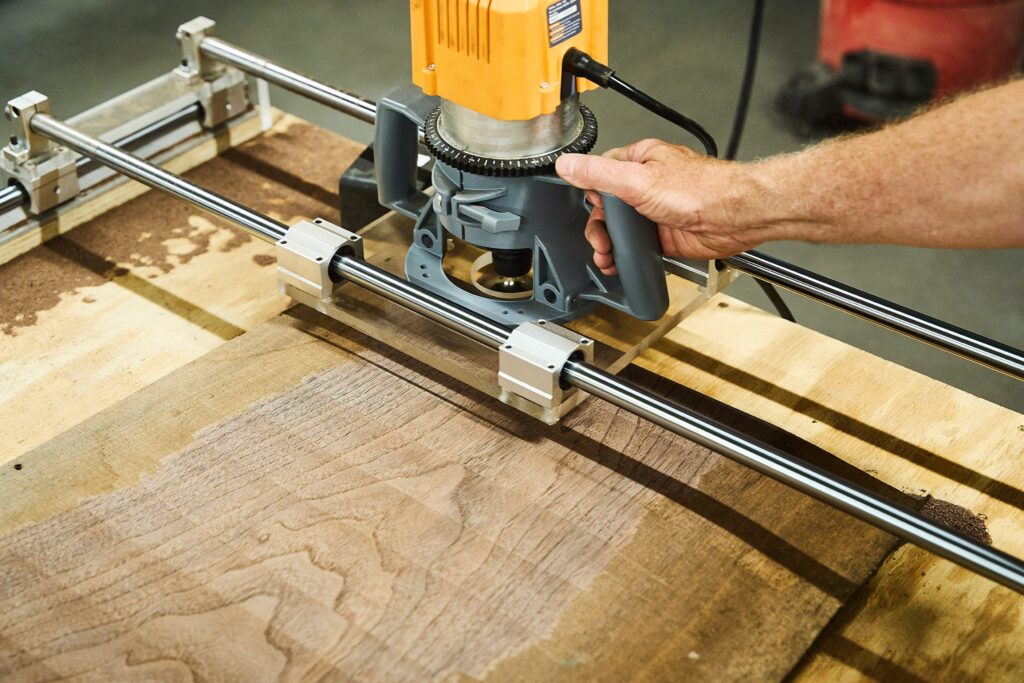
A typical DIY router sled consists of two parallel rails (made of plywood or MDF), a router carriage that slides over the rails, and a flat baseboard that holds the slab.
Advantages of a DIY Router Sled
- 💰 Budget-friendly – Can be made for under $100 using common materials.
- ⚙️ Fully customizable – Build to any size, shape, or thickness.
- 🧰 Repairable and upgradeable – Replace parts easily as they wear out.
- 🪵 Perfect for beginners – Helps new woodworkers understand router control and flattening techniques.
Drawbacks
- Manual setup takes longer than commercial kits.
- Wooden rails may warp slightly over time if not properly sealed.
- Requires careful leveling to achieve perfect flatness.
🗣️ “Building your own DIY router sled teaches you more about precision than any power tool ever could,” says Dan F., furniture craftsman with 15 years of experience.
Here’s a simple material list for a DIY router sled setup:
| Component | Recommended Material | Notes |
|---|---|---|
| Rails | ¾” MDF or plywood | Keep straight and sealed |
| Sled base | ½” plywood | Must be perfectly flat |
| Router carriage sides | Hardwood or aluminum | Ensures stability |
| Hardware | Screws, bolts, washers | For smooth movement |
Pro Tip: Apply paste wax or Teflon spray to the rail surfaces for smoother sled movement.
2. Adjustable Router Sleds
An adjustable router sled is a step up from a basic DIY design. It features movable rails or height-adjustable supports, allowing you to change the cutting depth and accommodate different slab thicknesses without rebuilding the setup.
Advantages
- ⚖️ Highly versatile – Works for slabs of varying thicknesses.
- 🔩 Precision control – Adjustable knobs or threaded rods ensure perfect leveling.
- 🧱 More stable – Reduces vibration during routing passes.
Drawbacks
- More complex to build or assemble.
- Typically heavier than simple sleds.
Adjustable sleds are ideal for professionals who regularly flatten different slab sizes, such as furniture makers or epoxy resin artists.
3. Commercial Router Sled Kits
For woodworkers who prefer ready-to-use solutions, commercial router sled kits offer a professional and time-saving option. These kits typically feature aluminum rails, precision bearings, and pre-drilled router mounts, giving users the confidence of smooth operation and consistent accuracy.
Popular Router Sled Kits (2025 Overview)
| Brand | Material | Max Width | Price Range | Notable Feature |
|---|---|---|---|---|
| Woodpeckers Slab Flattening Mill Pro | Aluminum | Up to 48″ | $$$$ | Precision linear bearings |
| Router Slab Buddy | Steel | Up to 36″ | $$$ | Adjustable depth stops |
| Bora Router Sled Kit | Aluminum | Up to 30″ | $$ | Lightweight, portable design |
| Shop Fox Router Sled System | Steel + MDF | Customizable | $$ | Great balance of price and durability |
Advantages of Commercial Router Sled Kits
- 🪚 Time-saving – No need to measure, cut, or align components manually.
- 🎯 Professional precision – Factory-calibrated for accuracy.
- 🧰 Durable materials – Aluminum and steel components resist warping.
- 🧽 Cleaner results – Integrated dust collection in some models.
Drawbacks
- 💸 Higher initial cost ($250–$1,000).
- 🏋️♂️ Can be bulky to store or move.
- ⚙️ Limited customization compared to DIY designs.
📈 In a 2024 woodworking survey by Woodcraft Magazine, 41% of professionals reported switching from DIY sleds to commercial kits for improved precision and time efficiency.
4. Router Sled Tables
A router sled table integrates the sled system directly into a permanent workbench or base table. This design provides maximum stability and repeatability, making it ideal for workshops that frequently produce slab furniture or epoxy tables.
Key Benefits
- 🔨 Always ready to use – No assembly required each time.
- 📏 Consistent results – Fixed alignment ensures perfectly parallel passes.
- 🧲 Easier dust management – Often includes dust collection ports.
- 🧱 Professional-grade setup – Suitable for high-volume or commercial shops.
Considerations
- Requires more workshop space.
- Higher upfront cost and setup time.
- Not portable like DIY or adjustable sleds.
If you flatten slabs regularly (2–3 times a week), a router sled table can drastically improve workflow efficiency and surface consistency.
5. Hybrid Router Sleds
Hybrid router sleds combine the flexibility of DIY builds with the precision of commercial kits. For example, you might use custom aluminum rails with a homemade wooden sled base. This approach offers the best of both worlds:
- Precision and rigidity from metal components.
- Affordability and adaptability from DIY construction.
🧩 Hybrid router sleds are increasingly popular in 2025 because they balance customization, precision, and cost — especially for intermediate woodworkers.
Router Sled Comparison Table
| Type | Cost | Difficulty | Adjustability | Durability | Best For |
|---|---|---|---|---|---|
| DIY Router Sled | $ | Easy | Medium | Moderate | Beginners, hobbyists |
| Adjustable Router Sled | $$ | Moderate | High | High | Serious woodworkers |
| Commercial Kit | $$$$ | Easy | Medium | Very High | Professionals |
| Router Sled Table | $$$ | Hard | Low | Very High | Full-time workshops |
| Hybrid Sled | $$ | Moderate | High | High | Custom builders |
Key Takeaway
There’s no single “best” router sled design — the right choice depends on your needs, tools, and budget.
- A DIY router sled is perfect for getting started on a budget.
- An adjustable or hybrid sled is ideal for growing shops.
- A commercial router sled kit or router sled table suits professional operations that demand precision and repeatability.
No matter which type you choose, the goal is the same: achieve a perfectly flat, even surface on your woodworking projects — every single time.
Router Sled Components Explained
Every router sled—whether DIY or professional—relies on a few key components that determine its precision, stability, and ease of use. Understanding how each part works not only helps you build or choose a better sled, but also ensures that every slab you flatten comes out perfectly level and smooth.
Below, we’ll break down each router sled component, from the rails to the router bit, explaining its role, ideal materials, and setup recommendations.
1. Rails — The Foundation of a Router Sled
The rails are the backbone of any router sled system. They define the plane along which your router moves, directly affecting how flat and consistent your finished surface will be.
Purpose and Function
The rails support the sled and ensure it stays level as it glides back and forth across the workpiece. If your rails are uneven, every cut will reflect that unevenness—so rail setup is absolutely crucial.
Best Materials for Rails
| Material | Pros | Cons |
|---|---|---|
| MDF or Plywood (¾”) | Inexpensive, easy to cut | Can warp if exposed to moisture |
| Aluminum Extrusions | Rigid, lightweight, precise | Higher cost |
| Steel Angle or Box Tubing | Extremely strong and straight | Heavy and may require welding |
💡 Pro Tip: When using wooden rails, always seal the edges with polyurethane or varnish to prevent moisture warping. Even a small twist can cause uneven cuts across a large slab.
Leveling and Alignment
- Use a digital level or spirit level to confirm both rails are parallel.
- Secure them on a flat base using shims or adjustable supports.
- Check alignment frequently, especially before flattening expensive slabs.
2. The Sled Base (Router Carriage Platform)
The sled base, sometimes called the router carriage, holds the router and moves along the rails. It must be rigid, flat, and smooth to ensure even passes.
Key Features
- Flat Surface: Prevents the router from rocking during passes.
- Smooth Underside: Ensures friction-free movement.
- Handles or Guides: Provide user control and reduce fatigue.
Common Materials
- ¾” plywood or acrylic sheet for DIY builds.
- CNC-milled aluminum for high-end kits.
A good sled base should extend at least 2–3 inches beyond each rail for stability and prevent tipping during edge passes.
Design Tip
Add side guards or guide rails to the sled base to keep the router centered over the slab, minimizing the risk of uneven cuts.
3. Router Carriage Sides
The carriage sides (or sled walls) connect the sled base to the router. They slide along the rails, keeping the router perfectly aligned.
Best Practices
- Height must be tall enough to clear the thickest slab you plan to flatten.
- The sides should have smooth contact points—apply wax or UHMW plastic for easier glide.
- Maintain consistent spacing to prevent binding or chatter.
Pro Tip: Use T-track or slot designs in the side panels to allow fine height adjustments and easy router removal.
4. Router and Router Mount
The router is the heart of the system—it does the actual cutting. Choosing the right router and mount is critical for efficiency and accuracy.
Ideal Router Features
| Feature | Why It Matters | Recommendation |
|---|---|---|
| Plunge Base | Enables depth adjustments during operation | Bosch 1617EVSPK, DeWalt DW618 |
| Variable Speed Control | Prevents burning and improves cut quality | Essential for large bits |
| High Horsepower (2+ HP) | Handles hardwoods and epoxy resin | Recommended for slab work |
Router Mounting Tips
- Center the router on the sled for even balance.
- Use lockable knobs or bolts to secure the router in place.
- Test bit depth before every pass to avoid gouging or uneven cuts.
🪚 Quote: “A router sled is only as good as its router. Don’t skimp here—the smoother your router runs, the flatter your slab will be.” — Mark L., Woodworking Mentor at FineWoodCrafts.com.
5. Router Bit for Sleds — The Unsung Hero
The router bit plays a crucial role in determining surface finish, cutting speed, and efficiency. Not all bits are suitable for flattening large slabs—some can cause tear-out or burn marks.
Best Types of Bits for Router Sleds
| Bit Type | Ideal Use | Benefits |
|---|---|---|
| Fly Cutter (Flattening Bit) | General slab flattening | Smooth finish, large coverage area |
| Spoilboard Cutter | CNC-style precision | Excellent for epoxy and hardwood |
| Insert Carbide Bit | Professional use | Long-lasting and resharpenable |
Bit Size and Speed Recommendations
| Bit Diameter | Router Speed (RPM) | Ideal for |
|---|---|---|
| 1” | 18,000 – 20,000 | Small boards or detail passes |
| 1 ½” | 14,000 – 16,000 | Medium slabs |
| 2”+ | 10,000 – 12,000 | Large slabs and epoxy tables |
⚙️ Pro Tip: Always start shallow—about 1/16” per pass—and gradually increase depth. This minimizes strain on your router and prevents burning or chatter.
6. Base Surface (Work Support Platform)
The base platform supports your slab and ensures it remains stable throughout the flattening process. Without a flat and secure base, even the best sled will produce inconsistent results.
Tips for Setting Up the Base
- Use ¾” MDF or melamine for a perfectly flat surface.
- Support the slab using wedges or shims to eliminate rocking.
- Use double-sided tape, clamps, or hot glue to secure the slab in place.
Optional Upgrade: Some woodworkers use vacuum hold-down systems for professional setups, providing even pressure without clamps.
7. Dust Collection System
Routing creates a large volume of fine dust, which can obscure visibility and damage your tools. A good dust collection setup is essential for safety and performance.
Best Practices
- Use a dust boot or vacuum hose near the router bit.
- Connect to a shop vac or central dust collection system (100+ CFM recommended).
- Clean after every session to prevent buildup on rails or the sled base.
🧹 Safety Tip: Fine dust from epoxy or hardwood can be hazardous—always wear a respirator and use active dust collection during operation.
8. Optional Add-Ons and Enhancements
Modern router sled setups often include optional upgrades that improve precision and efficiency:
- T-track systems for adjustable rails.
- Digital depth gauges for perfect thickness control.
- Leveling feet for uneven workshop floors.
- Linear bearings or rollers for ultra-smooth movement.
- Clamp jigs for fast slab setup and removal.
These add-ons can transform a basic DIY router sled into a high-performance precision tool.
Router Sled Component Summary
| Component | Importance | Recommended Material | Maintenance Tip |
|---|---|---|---|
| Rails | Foundation of accuracy | Aluminum or sealed MDF | Keep level and waxed |
| Sled Base | Supports router | Plywood or acrylic | Ensure flatness |
| Router Carriage | Guides motion | Hardwood/aluminum | Lubricate for smooth glide |
| Router | Cutting tool | Plunge router (2+ HP) | Check bit alignment |
| Router Bit | Determines finish | Carbide spoilboard bit | Clean regularly |
| Base Platform | Stabilizes workpiece | MDF or melamine | Re-level often |
Key Takeaway
Every router sled component works together to achieve precision flattening. Even the smallest detail—like a warped rail or dull bit—can drastically affect the outcome. By understanding how each part functions, you can build, tune, and maintain your router sled for optimal performance, ensuring perfectly level slabs every time.
How to Build a Router Sled (Step-by-Step Guide)
Building your own router sled is one of the most rewarding woodworking projects you can tackle. Not only is it cost-effective, but it also helps you understand the principles of flatness, precision, and router control—skills that translate to every woodworking discipline.
In this section, we’ll walk through how to build a DIY router sled step by step, using affordable materials and common shop tools.
🪚 Estimated Build Time: 2–3 hours
💰 Estimated Cost: $60–$100 (depending on materials)
📏 Difficulty Level: Beginner to Intermediate
Materials and Tools You’ll Need
| Category | Item | Notes |
|---|---|---|
| Base Materials | ¾” MDF or Plywood Sheet | Serves as the slab platform |
| Rails | Two 6–8 ft lengths of MDF, plywood, or aluminum | Must be straight and rigid |
| Sled Base | ½”–¾” plywood sheet | The router carriage platform |
| Carriage Sides | Two plywood or hardwood strips | Hold the sled above the rails |
| Fasteners | Screws, washers, bolts | For assembly and adjustments |
| Router | Plunge router (2+ HP recommended) | For flattening operations |
| Router Bit | 1 ½”–2” carbide spoilboard or flattening bit | Produces smooth, flat cuts |
| Leveling Tools | Spirit or digital level, square, straightedge | Ensures parallel alignment |
| Dust Control | Shop vac or dust hose | Keeps work area clean |
Optional upgrades: T-track rails, clamps, UHMW glide strips, or handles for added comfort.
Step 1: Plan and Measure Your Router Sled Dimensions
Start by determining the maximum slab size you plan to flatten. Your router sled should be slightly larger than your biggest project.
Example:
If your largest slab is 36″ wide and 8′ long:
- Make your rails 8′ long.
- Build your sled about 42″ wide.
Rule of Thumb:
The sled should extend 3–4 inches wider than the slab on both sides and at least 12 inches longer.
This ensures the router can travel fully across the slab without the bit hanging off the edge.
Step 2: Build the Rails
Cut two straight, parallel pieces of MDF, plywood, or aluminum to form your router sled rails.
Steps:
- Cut both rails to identical lengths.
- Mount them securely on a flat workbench or baseboard.
- Use a level and straightedge to make sure both rails are perfectly parallel.
- Shim underneath as needed to eliminate dips or twists.
Pro Tip: Use adjustable legs or leveling bolts if your shop floor isn’t perfectly flat. This ensures accurate alignment every time you set up your router sled.
Step 3: Build the Router Sled Base (Carriage Platform)
The sled base supports the router and slides along the rails. It must be flat, rigid, and wide enough to span both rails.
Steps:
- Cut a piece of ½” or ¾” plywood for the sled base.
- Attach two side walls (carriage sides) of equal height.
- Drill mounting holes or slots for your router base in the center.
- Add handles or knobs on top for better control.
Optional Enhancements:
- Apply paste wax or Teflon spray to the sled’s contact surfaces for smooth movement.
- Attach UHMW plastic strips or ball-bearing rollers to reduce friction.
⚙️ Pro Tip: Ensure your router is perfectly centered on the sled base to maintain even cutting across the slab.
Step 4: Assemble the Router Sled and Rails
Now, place the sled on top of the rails to test fit and movement. The sled should glide effortlessly with no binding or wobble.
Checkpoints:
- Rails are parallel and level.
- Router bit clears the slab at its highest point.
- Movement is smooth and consistent.
If the sled rocks or drags, recheck alignment and flatten the base surface with shims or adjustments.
Step 5: Level and Secure the Workpiece
Before routing, your slab must be stable and level on the work surface. Even minor rocking will cause uneven cuts.
Leveling Steps:
- Place the slab on your base platform (MDF or melamine sheet).
- Use small wedges, shims, or hot glue blobs to stabilize it.
- Check with a spirit level across multiple points.
- Secure it using clamps or double-sided tape.
Pro Tip: Mark the high and low spots on the slab with a pencil. This helps you visualize how much material needs to be removed.
Step 6: Install the Router Bit and Set Depth
Insert a carbide flattening bit into your router. Set the depth for the first pass—typically 1/16” to 1/8” deep.
Bit Setup Tips:
- Tighten the bit securely to prevent vibration.
- Adjust the plunge depth for a shallow, controlled cut.
- Check clearance on both ends before turning the router on.
🔧 Safety Tip: Always unplug your router while changing bits or adjusting depth settings.
Step 7: Test and Begin Flattening
Before committing to the full surface, perform a test cut on a scrap piece or an inconspicuous corner of the slab.
Then, start your flattening passes:
- Begin at one corner and move the router sled slowly across the surface.
- Overlap each pass by about 25–30% for uniform coverage.
- After one complete pass, lower the bit slightly for the next layer.
- Continue until the entire surface is flat and smooth.
Pro Tip: Move the router at a consistent speed. Too fast can cause tear-out, while too slow can leave burn marks.
Step 8: Sand and Finish
After flattening, your slab will have router marks or faint ridges. Smooth these with progressive sanding:
| Grit | Purpose |
|---|---|
| 80 | Removes router lines |
| 120 | Smooths surface |
| 180 | Prepares for finish |
| 220+ | Final polish |
If working with epoxy, start sanding at 120 grit to avoid scratches.
Finish your slab with oil, polyurethane, or epoxy coating, depending on your project.
Step 9: Maintenance and Upkeep
After use:
- Clean rails and sled surfaces of sawdust.
- Check screws and bolts for looseness.
- Store the sled in a dry place to avoid warping.
If you notice any uneven cuts, recheck the rail alignment before your next use.
Common Build Mistakes to Avoid
| Mistake | Result | Fix |
|---|---|---|
| Rails not parallel | Uneven surface | Shim or re-level |
| Router not centered | Grooves or dips | Re-drill router mount |
| Sled rocking on rails | Wavy cuts | Flatten base and check fit |
| Taking too deep passes | Tear-out or burn marks | Reduce depth per pass |
🧩 Expert Quote: “A router sled doesn’t need to be fancy—it just needs to be straight, level, and secure. Precision comes from setup, not expense.” — Chris L., Slab Furniture Maker, Oregon.
Key Takeaway
Building your own router sled is straightforward, cost-effective, and deeply educational. Once assembled, it becomes one of the most versatile tools in your workshop—capable of flattening slabs, truing tabletops, and leveling resin pours with professional precision.
✳️ In a few hours and under $100, you can build a tool that rivals machines costing thousands.