
What Is a Trim Router and Why Every Woodworker Should Own One
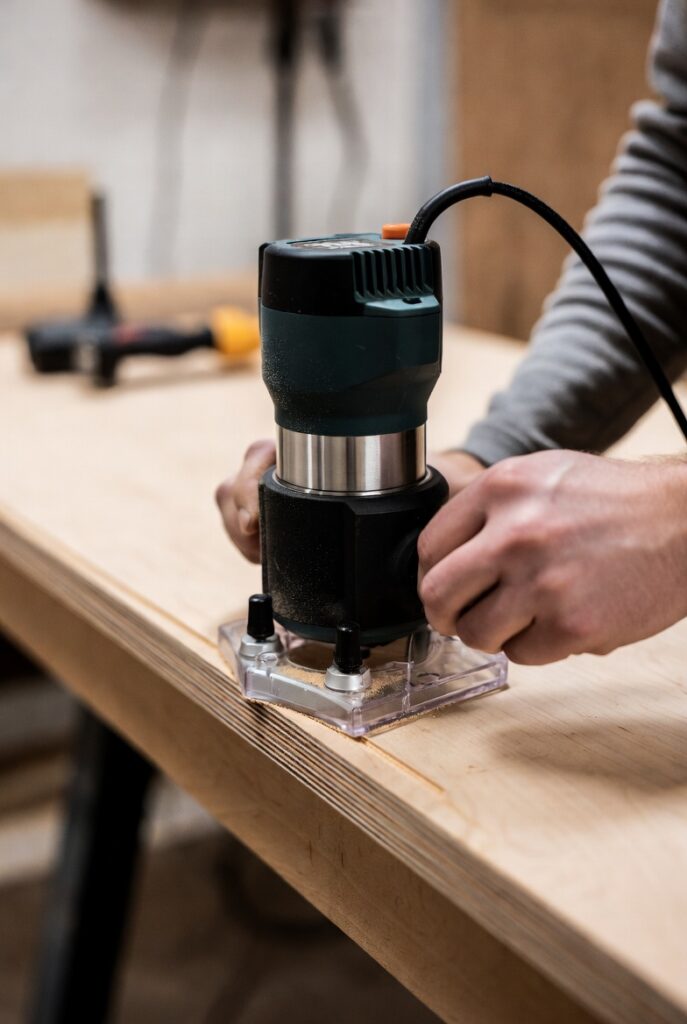
A trim router—also called a palm router or compact router—is one of the most versatile and valuable tools in any woodworking shop. It’s a smaller, lightweight version of a full-size wood router, designed for precision trimming, edging, and shaping. While it may look modest compared to its larger cousins, a trim router packs surprising power and can handle a wide range of woodworking tasks that require detail and finesse.
Definition and Purpose of a trim router
A trim router is a handheld power tool that spins a router bit at extremely high speeds—often between 10,000 and 30,000 RPM. It’s primarily used to trim router laminate edges, shape decorative profiles, and smooth small surfaces. Its compact design allows for easy one-handed operation, making it ideal for beginners, hobbyists, and professional woodworkers who need accuracy without bulk.
Unlike a large plunge or fixed-base router, a trim router is not intended for heavy-duty material removal. Instead, it’s perfect for light to medium-duty tasks, such as edge trimming, groove cutting, and template routing. Because of its smaller motor (typically 1–1.25 horsepower), it provides greater control over fine details and is less intimidating for new users.
💬 Expert Insight: “A trim router gives you the control of a pencil and the precision of a blade,” says Mark Duginske, woodworking author and tool designer. “It’s the best balance between power and portability.”
Trim Router vs. Full-Size Router at a Glance
| Feature | Trim Router | Full-Size Router |
|---|---|---|
| Power | 1–1.25 HP | 2–3.5 HP |
| Weight | Lightweight (3–5 lbs) | Heavy (7–12 lbs) |
| Ideal Use | Edge trimming, light cuts, small profiles | Deep cuts, joinery, large profiles |
| Ease of Use | Beginner-friendly | Requires more control |
| Price Range | $70–$200 | $150–$400 |
As the table shows, a trim router offers a great entry point for anyone learning woodworking. Its lower power output is compensated by greater control, and its affordability makes it an essential addition even for those who already own a full-size router.
Why Every Workshop Needs a Trim Router
Whether you’re a DIY enthusiast, cabinetmaker, or furniture designer, a trim router can significantly improve your workflow. Here’s why:
- Compact and Easy to Handle: You can operate it comfortably with one hand, allowing better maneuverability and visibility.
- Perfect for Small Projects: Ideal for creating round-overs, chamfers, and grooves on small wooden pieces.
- High Precision: Great for fine detail work, sign making, and intricate edge designs.
- Affordable Yet Powerful: A quality trim router delivers professional-level performance at a fraction of the cost.
- Portable Tool: Easy to carry between job sites or store in a small workshop.
A good trim router becomes an extension of your hand. It allows you to execute precise cuts, replicate patterns, and achieve professional finishes even on simple projects. When paired with the right bits and accessories, it becomes a multi-functional tool capable of trimming laminates, routing inlays, and even performing plunge cuts with optional bases.
A Real-World Example: trim router in Action
Let’s consider a real example: John, a small workshop owner, used to rely only on a full-size router for all his tasks. He struggled with control when working on thin plywood or detailed edges. Once he added a Makita RT0701C trim router to his setup, he was able to:
- Achieve cleaner laminate edges with less tear-out.
- Cut custom grooves for decorative furniture.
- Reduce setup time by 30% compared to using a heavy router.
This is a typical case that demonstrates how even professionals benefit from the precision, versatility, and portability of a trim router.
In Summary
A trim router may look small, but it’s a powerhouse of precision and control. It’s a must-have tool for woodworkers who value accuracy, portability, and smooth finishing. Whether you’re crafting furniture, trimming edges, or adding a decorative touch to your project, a trim router can elevate your craftsmanship to a new level.
nderstanding the Basics of a trim router
Before diving into complex techniques or accessories, it’s important to understand the fundamentals of a trim router—how it works, its essential components, and why it’s designed the way it is. This section gives you a complete technical and practical overview so you can use your trim router safely and effectively.
How a Trim Router Works
At its core, a trim router is a high-speed rotary tool powered by an electric motor that spins a router bit to cut, trim, or shape wood and similar materials. Most trim routers feature variable speed control, allowing you to adjust the revolutions per minute (RPM) from around 10,000 up to 30,000 RPM depending on the material and bit size.
Here’s a quick breakdown of how a trim router operates:
- Motor Power: Typically between 1 to 1.25 horsepower, providing enough torque for light to moderate routing work.
- Router Bit: The cutting tool attached to the collet. Different bits create different shapes and profiles (round-over, flush trim, chamfer, etc.).
- Collet: A small clamp that holds the bit securely. Most trim routers accept ¼-inch bits, though some models include ½-inch collet options.
- Base Plate: Keeps the router stable on the work surface and allows smooth gliding while cutting.
- Depth Adjustment Ring or Lever: Controls how deep the bit cuts into the material—an essential feature for precise woodworking.
- Power Switch and Speed Dial: Easily accessible controls for starting, stopping, and adjusting speed mid-operation.
When you switch on your trim router, the motor spins the bit at high speed. As you guide it along the material’s edge or surface, it removes small layers of wood or laminate to produce smooth, precise finishes.
Main Parts of a Trim Router and Their Functions
| Component | Function |
|---|---|
| Motor Housing | Contains the electric motor; the heart of the trim router. |
| Collet & Nut | Holds and tightens the router bit in place. |
| Base (Fixed or Plunge) | Provides stability and controls the depth of cut. |
| Depth Adjustment System | Allows precise setting for routing depth. |
| Power Switch & Speed Dial | Controls operation and speed variation. |
| Handles or Grip | Enables comfortable and safe handling. |
| Dust Port (if available) | Helps collect wood dust for cleaner operation. |
Each part plays a critical role in ensuring the trim router delivers clean, controlled, and accurate results. Knowing these components not only helps with operation but also makes maintenance and troubleshooting much easier.
Power Ratings and Speed Explained
One reason trim routers are favored by both hobbyists and professionals is their impressive power-to-weight ratio. Despite being compact, many models deliver 1.25 horsepower or more, sufficient for most routing tasks such as edge trimming, sign making, and decorative profiling.
Speed control is equally vital. Lower speeds (10,000–15,000 RPM) work well for softwoods or plastics, while higher speeds (20,000–30,000 RPM) are ideal for hardwoods. A variable speed dial ensures the trim router bit doesn’t burn or tear the wood, especially on intricate cuts.
⚙️ Pro Tip: Always match your speed to the bit size—larger bits need slower speeds to prevent chatter and ensure safety.
Types of Trim Router Bases
Modern trim routers often come with interchangeable bases, each designed for specific applications:
- Fixed Base Trim Router: Best for edge trimming, shaping, and detail work. Provides consistent depth and control.
- Plunge Base Trim Router: Allows you to “plunge” the bit directly into the material for cutting slots, inlays, and grooves.
- Offset Base: Enables routing in tight corners or near walls where a standard base won’t fit.
- Tilt Base: Offers angled cutting for creative edge designs and bevels.
Having multiple bases makes your trim router far more versatile—transforming it from a simple edge trimmer into a multi-purpose woodworking machine.
Router Bits Compatible with Trim Routers
A trim router’s versatility depends largely on the router bits you use. Some of the most common bit types include:
- Flush Trim Bit: Perfect for trimming laminate or veneer to match the edge of a surface.
- Round-Over Bit: Softens sharp corners for a professional finish.
- Chamfer Bit: Creates angled cuts along edges for a decorative effect.
- Straight Bit: Cuts grooves or dados for joinery.
- Pattern Bit: Follows templates to replicate exact shapes.
- V-Groove and Cove Bits: Used for decorative profiles and lettering.
Always ensure your bit’s shank size matches your trim router collet—usually ¼ inch. Using dull or incorrect bits can cause burning, chipping, or even dangerous kickbacks.
Safety Precautions When Using a Trim Router
Although a trim router is smaller and lighter than most power tools, safety is crucial. The high-speed rotation of the bit can easily cause damage or injury if handled carelessly. Always follow these guidelines:
- Wear Eye and Ear Protection: Flying wood chips and high noise levels can harm your eyes and hearing.
- Secure the Workpiece: Use clamps or a workbench to prevent movement during routing.
- Check the Bit Tightness: Loose bits can slip or break.
- Start the Trim Router Before Touching the Wood: Let it reach full speed first.
- Feed Against the Bit Rotation: Moving in the wrong direction causes loss of control.
- Unplug Before Changing Bits: Never switch bits while the router is powered.
⚠️ Important: Always maintain a firm grip on your trim router, especially when starting or stopping. Sudden torque can make it jump if not controlled.
Why Knowing the Basics Matters
Understanding how your trim router functions allows you to achieve cleaner, safer, and more precise results. Whether you’re edge trimming a countertop or carving intricate designs, mastery begins with knowledge of its components and mechanics. Once you understand the basics, you’ll be better prepared to explore advanced uses, accessories, and woodworking techniques.
Trim Router vs Full-Size Router — What’s the Difference?
When shopping for woodworking tools, many people wonder: “Should I buy a trim router or a full-size router?” The truth is, both tools serve different purposes, and understanding their differences will help you choose the right one for your workshop.
While a trim router is small, lightweight, and precise, a full-size router is powerful, heavy, and ideal for deep cuts or large-scale joinery. Let’s break down the major differences between these two essential woodworking tools.
1. Power and Performance
The most obvious distinction between a trim router and a full-size router is motor power.
- A trim router typically ranges between 1.0 to 1.25 horsepower, making it perfect for light to medium-duty tasks like edge trimming, laminate cutting, and decorative profiling.
- A full-size router, on the other hand, delivers 2 to 3.5 horsepower, capable of removing large amounts of material in a single pass, such as cutting mortises, rabbets, or deep grooves.
In short:
If you’re working on delicate tasks that require finesse and accuracy, the trim router is your best friend. If your project demands raw cutting power, go for a full-size router.
2. Size, Weight, and Portability
A trim router is specifically designed for portability and one-handed use. Weighing only 3–5 pounds, it’s incredibly easy to maneuver and ideal for small workpieces or detailed work.
A full-size router, however, often weighs 7–12 pounds and requires two hands to operate safely. While its bulk provides stability during deep cuts, it can be overkill for small tasks like trimming laminate or rounding corners.
💡 Quick Tip: Many professionals keep both routers on hand—using the trim router for finishing and the full-size router for rough cutting or joinery.
3. Cutting Depth and Bit Size
A trim router usually accepts ¼-inch shank bits, while a full-size router can handle ½-inch bits. The larger shank provides more strength for deeper, more aggressive cuts.
However, ¼-inch bits used in a trim router are cheaper, easier to change, and sufficient for most light tasks like rounding edges or trimming veneer.
Here’s a quick comparison:
| Feature | Trim Router | Full-Size Router |
|---|---|---|
| Power Output | 1–1.25 HP | 2–3.5 HP |
| Bit Size | ¼ inch | ½ inch (sometimes ¼ inch compatible) |
| Weight | 3–5 lbs | 7–12 lbs |
| Depth of Cut | Shallow to moderate | Deep cuts possible |
| Ideal Use | Finishing, edge trimming, small routing tasks | Joinery, mortising, deep grooves |
| Ease of Use | Very beginner-friendly | Requires skill and experience |
4. Control and Precision
One of the biggest reasons woodworkers love the trim router is its precision and ease of handling. Its smaller motor provides less torque kickback, making it safer for beginners and easier to control during detailed work.
The trim router excels at:
- Rounding over edges on furniture or shelves.
- Trimming laminate and veneer.
- Creating decorative profiles and fine details.
Meanwhile, the full-size router shines in heavy-duty applications such as:
- Cutting deep mortises and dados.
- Shaping large hardwood panels.
- Performing table-mounted routing for consistent results.
🪵 Case Study Example:
In a professional cabinet shop, a DeWalt 611 trim router is often used for finishing cabinet edges and trimming laminate, while a DeWalt 618 full-size router handles deep dado cuts for shelf joints. Each tool complements the other, optimizing speed and precision.
5. Noise, Vibration, and Control
A trim router is significantly quieter and smoother to operate. Its smaller motor generates less vibration, allowing for more comfortable use during long woodworking sessions.
In contrast, a full-size router—while powerful—can be loud and harder to control, especially for beginners. If you value comfort, reduced fatigue, and precision, the trim router is the smarter option.
6. Cost and Accessibility
If you’re just getting started with woodworking, a trim router is a cost-effective investment. Quality models from brands like Makita, Bosch, or DeWalt start around $80–$150, whereas a full-size router typically costs $200–$400.
This affordability makes the trim router a perfect entry-level tool for beginners, students, and DIY hobbyists looking to develop their routing skills.
💬 Expert Quote:
“You can do 80% of what a full-size router does with a trim router—just in a smaller, more comfortable package.” — James McGuire, Master Carpenter, 2024 Woodworking Expo
7. Which One Should You Choose of trim router?
If your woodworking projects involve detailed trimming, edge finishing, or laminate work, then a trim router is your best choice. It’s lightweight, versatile, and ideal for fine precision tasks.
However, if you frequently build large furniture pieces, cut deep grooves, or need more power, then investing in a full-size router is worthwhile.
| Project Type | Recommended Router |
|---|---|
| Edge trimming & laminate cutting | ✅ Trim Router |
| Decorative profiles & sign making | ✅ Trim Router |
| Mortise and tenon joints | 🪚 Full-Size Router |
| Deep grooves & table routing | 🪚 Full-Size Router |
| Small DIY or craft projects | ✅ Trim Router |
8. The Best of Both Worlds: Combo Kits
For those who want flexibility, consider a router combo kit that includes both a trim router and a plunge base or even a full-size router. Many brands, like Bosch and Makita, sell kits where you can swap bases or collets to convert your trim router into a more powerful setup.
This gives you the best of both worlds—lightweight precision when needed, and added depth capacity for more demanding tasks.
In Summary
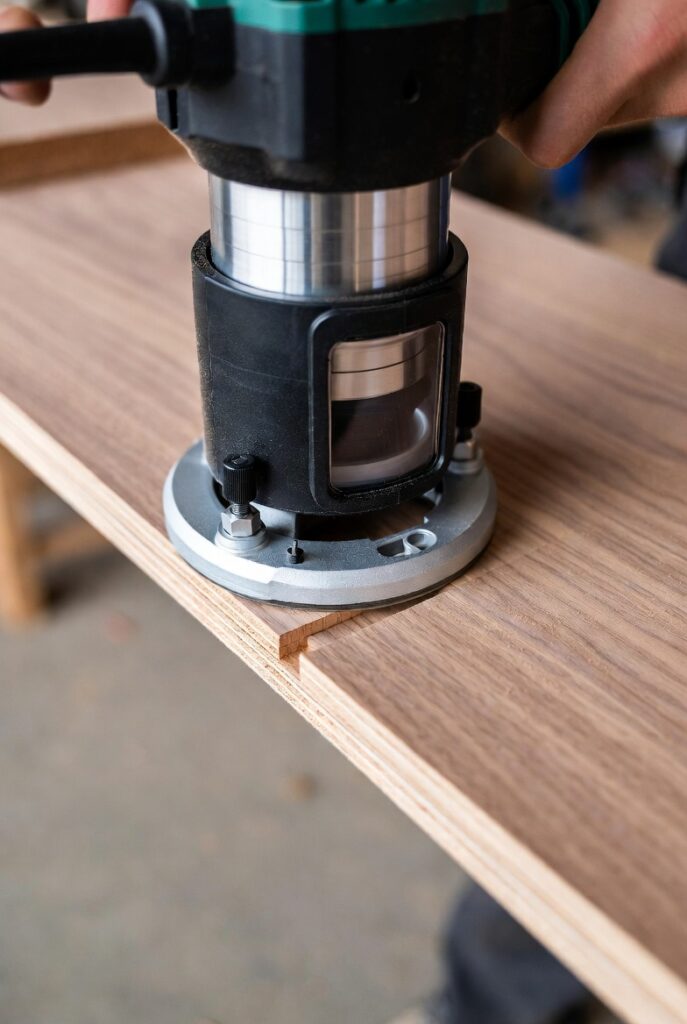
Both tools are essential, but the trim router stands out for its precision, affordability, and control .trim router is good Whether you’re working on small woodworking projects, crafting furniture edges, or trimming laminates, the trim router’s versatility makes it an invaluable addition to any workshop.
As many professionals say, “Once you use a trim router, you’ll wonder how you ever worked without one.”
Top Uses of a Trim Router (And Why It’s the Most Versatile Woodworking Tool You Can Own)
The trim router might be small in size, but its versatility makes it one of the most valuable tools in any woodworking setup. Whether you’re a beginner crafting your first shelf or a professional fine-tuning furniture edges, the trim router can handle a wide variety of precise cutting and shaping tasks.
Its compact design, high-speed motor, and interchangeable bits make it perfect for trimming, shaping, engraving, and decorative work. Below, we’ll explore the most common and effective uses of a trim router—and why every woodworker should master these applications.
1. Trimming Laminate and Veneer Edges of trim router
One of the primary uses of a trim router is trimming laminate or veneer flush with the surface of a countertop, tabletop, or cabinet.
A flush trim bit with a bearing guide allows the trim router to follow the contour of the material below, removing any excess laminate cleanly and smoothly. This technique is especially popular in cabinet making and countertop installation, where precision edges are essential.
💡 Pro Tip: Always move the trim router in the opposite direction of the bit’s rotation to prevent tear-out and ensure a smooth finish.
Recommended Bit: Flush trim bit with a top or bottom bearing
Ideal Speed: 20,000–25,000 RPM
Common Use Case: Countertop edge finishing, veneer trimming
2. Rounding Over Edges for a Professional Finish
A trim router is perfect for softening sharp edges on furniture pieces. Using a round-over bit, you can easily create smooth, rounded corners that are both visually appealing and safe to touch.
Rounded edges not only make furniture more comfortable but also prevent splintering over time—an essential detail for high-quality craftsmanship.
Popular Round-Over Bit Sizes:
| Bit Size | Typical Use |
|---|---|
| 1/8 inch | Small boxes, trim pieces |
| 1/4 inch | Shelves, tabletops |
| 3/8 inch | Furniture edges, stair treads |
🪵 Case Study: A furniture maker used a Bosch GKF125CEN trim router with a ¼-inch round-over bit to finish all edges on a set of oak shelves. The result was a smooth, professional edge finish that required no additional sanding.
3. Cutting Grooves, Slots, and Dados of trim router
While most people think of trim routers for edge work, they’re also excellent for cutting shallow grooves and dados. By attaching a straight bit, you can cut channels for drawer bottoms, inlays, or sliding cabinet panels.
Because the trim router is lightweight and easy to control, it allows you to make these cuts with precision—perfect for custom furniture or cabinetry.
Applications:
- Drawer and cabinet panel grooves
- Decorative inlays
- Joinery for small boxes or frames
Pro Tip: Use a router edge guide or straight edge fence for perfect alignment.
4. Sign Making and Lettering of trim router
A trim router equipped with a V-groove bit or engraving bit is ideal for sign carving, decorative lettering, and engraving wood designs. Its compact size allows for delicate control, making it possible to carve detailed text or designs even in tight spaces.
Woodworkers often use templates or stencils to maintain consistent letter spacing and depth. With a steady hand and the right bit, a trim router can create beautiful, professional-grade signs.
✍️ Pro Insight: The DeWalt DWP611 trim router, with built-in LED lighting, is a favorite among sign makers because it illuminates the work area for cleaner, more precise lettering.
5. Flush Trimming and Template Routing
When working with templates, a trim router becomes an indispensable precision tool. Using a pattern bit, you can follow a guide or template to replicate identical shapes—ideal for mass-producing identical wooden components such as chair legs, handles, or decorative panels.
Template Routing Tips:
- Secure your template firmly to avoid movement.
- Choose a bit with the bearing on the correct end (top or bottom) depending on your setup.
- Make multiple shallow passes instead of a single deep cut for cleaner edges.
6. Chamfering and Decorative Profiling
A trim router can add style and character to your woodworking projects by creating chamfers and beveled edges. By swapping in a chamfer bit, you can make crisp, angled cuts that give your furniture or woodwork a professional, geometric look.
Common Chamfer Uses:
- Cabinet doors
- Table edges
- Picture frames
- Decorative moldings
These details may seem small, but they elevate simple designs into polished, professional-quality pieces.
7. Trimming Edge Banding
When applying edge banding to plywood or MDF panels, a trim router with a flush-trim bit can remove the excess banding quickly and cleanly. Compared to manual trimming, using a trim router saves time and delivers uniform, chip-free edges.
Pro Tip: For ultra-smooth results, run the trim router along the grain direction and take light passes. Avoid pressing too hard—let the bit do the work.
8. Cutting Inlays and Decorative Grooves
For fine woodworking or decorative projects, a trim router allows you to cut precise inlay recesses. With the help of a plunge base and fine depth control, you can embed contrasting wood, metal, or epoxy into your projects for a premium look.
Example Uses:
- Jewelry boxes
- Custom cutting boards
- Artistic wall panels
- Decorative flooring patterns
💬 Quote: “The trim router gives you total artistic control. It’s not just a tool—it’s an extension of your creativity.” — Carla Jensen, Fine Woodworking Craftsman
9. Small-Scale Joinery Work
Although a trim router isn’t meant for heavy-duty joinery, it can handle light joinery tasks like cutting shallow mortises, tenon cheeks, and slots for biscuits or dowels. Using a straight bit with a guide, you can make accurate joints without needing large machines.
Benefits:
- Quicker setup for small projects
- Cleaner edges on soft and hardwood
- Ideal for repair or retrofit work
10. DIY and Craft Projects
For hobbyists, the trim router opens up endless creative possibilities. You can use it for:
- Engraving custom signs or coasters
- Shaping edges of cutting boards
- Crafting picture frames
- Creating decorative wall hangings
Because it’s lightweight, affordable, and versatile, the trim router is a must-have for crafters, makers, and home improvement enthusiasts.
In Summary
The trim router is far more than a laminate trimmer—it’s a multi-functional woodworking powerhouse. From edge trimming to engraving, it handles dozens of precision tasks that larger routers can’t do with the same level of control.
Whether you’re crafting furniture, trimming edges, or creating custom signs, the trim router offers the perfect balance of speed, precision, and creativity—making it one of the most essential tools in modern woodworking.
Choosing the Best Trim Router: What to Look For Before You Buy
Selecting the best trim router for your workshop can feel overwhelming—especially with so many models and brands competing in the market. However, understanding what makes a trim router effective, durable, and precise will help you make the right investment for your woodworking needs.
Let’s explore the key factors to consider when choosing a trim router that delivers both performance and longevity.
1. Power and Motor Speed of trim router
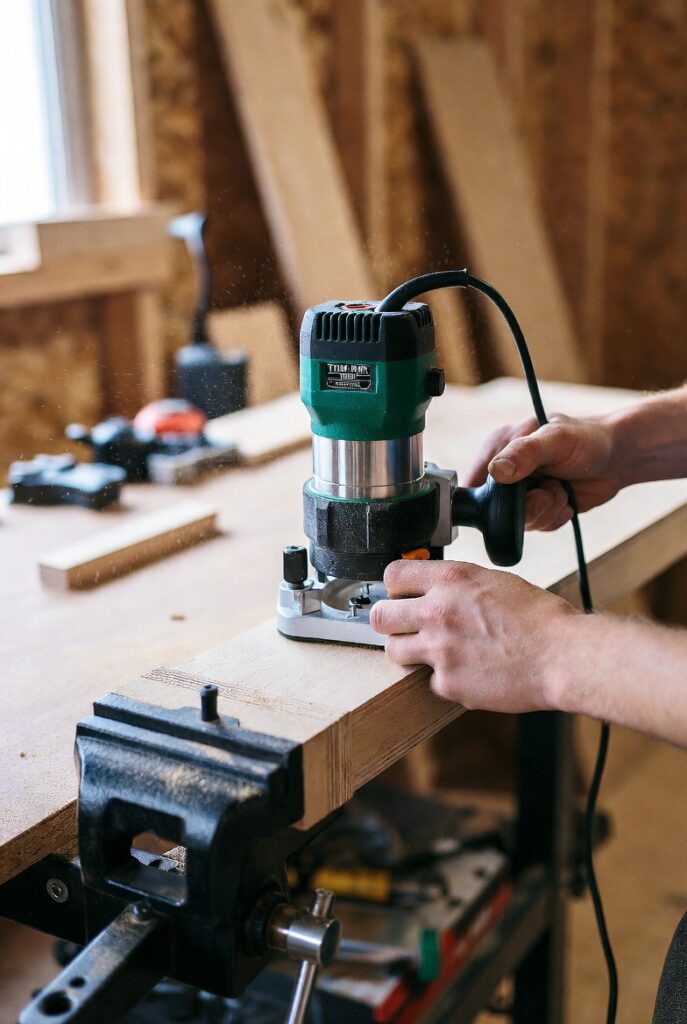
When evaluating a trim router, the first thing to check is motor power and speed. Most trim routers range between 1 to 1.5 horsepower (HP), and the RPM typically falls between 20,000 and 35,000 revolutions per minute.
- Higher RPMs allow smoother cuts, especially when trimming laminates or hardwoods.
- Variable speed controls give flexibility for different materials and bit types.
Example:
A Makita RT0701C trim router has a 1.25 HP motor and adjustable speed from 10,000 to 30,000 RPM — ideal for both precision work and aggressive cuts.
| Trim Router Model | Horsepower | Variable Speed | RPM Range |
|---|---|---|---|
| Makita RT0701C | 1.25 HP | Yes | 10,000–30,000 |
| DeWalt DWP611 | 1.25 HP | Yes | 16,000–27,000 |
| Bosch Colt GKF125CEN | 1.25 HP | Yes | 16,000–35,000 |
💡 Pro Tip: Choose a trim router with variable speed control so you can match the RPM to the material type — slower for plastics or softwoods, faster for hardwoods.
2. Ergonomic Design and Grip Comfort
Because a trim router is meant for handheld precision work, comfort and control are essential. A poorly designed handle can cause fatigue, especially during long sessions.
Look for these ergonomic features:
- Rubberized grip for better control
- Compact body design for stability
- Lightweight housing (typically under 4 lbs)
- Low vibration and smooth operation
✋ Expert Insight: The DeWalt DWP611 is often praised for its rubberized palm grip and LED-lit base, allowing precise handling even during intricate cuts.
3. Base Options (Fixed vs. Plunge Base)
Trim routers come in two main types:
- Fixed Base Trim Router: Ideal for edge trimming, laminate work, and flush trimming.
- Plunge Base Trim Router: Perfect for cutting grooves, inlays, or mortises that start in the middle of the workpiece.
Some models are combo kits, offering both bases for flexibility.
| Router Type | Best For | Example |
|---|---|---|
| Fixed Base | Trimming edges, chamfers | Bosch Colt GKF125CEN |
| Plunge Base | Inlays, grooves, signs | Makita RT0701CX7 |
| Combo Kit | Versatile all-around use | DeWalt DWP611PK |
⚙️ Recommendation: If you plan to use your trim router for both edge and plunge cuts, go for a combo kit—it’s the most cost-effective and flexible choice.
4. Bit Compatibility and Collet Size of trim router
Most trim routers use a ¼-inch collet, which fits standard router bits used for edging, trimming, and detailing. Some models also accept ⅜-inch collets for more specialized bits.
When choosing bits:
- Ensure they are carbide-tipped for longer life.
- Keep them sharp to maintain clean cuts.
- Store bits in a protective case to avoid damage.
🪵 Pro Tip: Using high-quality router bits can drastically improve the performance and finish of your trim router projects. Inferior bits can cause burn marks or tear-out.
5. Depth Adjustment System
A precise depth adjustment system is one of the most important features of any trim router. Look for models with:
- Micro-depth adjustment dials for fine tuning
- Locking mechanisms to hold settings securely
- Easy base removal for quick bit changes
Example:
The Makita RT0701C has a smooth rack-and-pinion depth adjustment, making it one of the easiest trim routers to fine-tune.
⚖️ Accuracy Tip: A difference of even 1/64 inch can change the fit of joints or decorative details—so precision depth control is essential.
6. Build Quality and Durability
The best trim routers are built with high-quality aluminum housings for durability and heat dissipation. Cheap plastic housings tend to vibrate and wear down faster.
Checklist for Durability:
- Aluminum or magnesium motor housing
- Sealed switch to prevent dust ingress
- Metal base plate with smooth glide
- Reinforced power cord for flexibility
🧰 User Review Insight: Many users report that Bosch’s Colt series trim routers maintain accuracy and stability even after years of heavy use, thanks to their solid aluminum build.
7. Visibility and Lighting
Visibility can make or break precision routing. Trim routers with LED lights built into the base help illuminate the cutting area, especially in low-light workshops.
Recommended Models with LED Lighting:
- DeWalt DWP611
- Bosch GKF125CEN
- Ryobi P601 One+
💡 Fact: Clear visibility not only enhances accuracy but also reduces operator fatigue, since you can focus less on adjusting your line of sight and more on the cut itself.
8. Dust Collection System
Wood dust can obscure your view and damage your trim router motor over time. A dust extraction port or adapter is crucial for keeping the workspace clean.
Advantages of Dust Collection:
- Cleaner workspace and better visibility
- Extended tool life
- Reduced health hazards from fine sawdust
🧹 Pro Tip: Pair your trim router with a shop vacuum or dust extractor for optimal performance and safety.
9. Brand Reputation and Warranty
When buying a trim router, choosing from reputable brands ensures reliability, safety, and customer support. Brands like Makita, Bosch, DeWalt, and Milwaukee consistently rank among the best for performance and longevity.
| Brand | Popular Model | Warranty |
|---|---|---|
| Makita | RT0701C | 1 Year |
| DeWalt | DWP611 | 3 Years |
| Bosch | GKF125CEN | 1 Year |
| Milwaukee | M18 Fuel Trim Router | 5 Years |
10. Price vs. Performance
While it might be tempting to buy the cheapest trim router, investing in a quality model saves money in the long run through better accuracy and durability.
Price Breakdown:
| Category | Price Range | Best For |
|---|---|---|
| Budget | $60–$100 | Hobbyists, small jobs |
| Mid-Range | $100–$160 | DIYers, regular use |
| Professional | $170–$300+ | Contractors, heavy-duty woodworking |
💬 Quote: “A good trim router pays for itself in accuracy and longevity. Cheap tools cost more in the long run.” — Jim Miller, Master Woodworker
Final Thoughts on Choosing a Trim Router
Selecting the right trim router depends on your specific projects and comfort level. Whether you’re a hobbyist shaping edges or a professional crafting intricate joinery, look for:
- Powerful motor with variable speed
- Comfortable, ergonomic grip
- Precision depth adjustment
- Durable build and LED lighting
When you find a trim router that fits these criteria, you’ll not only enjoy smoother cuts but also gain confidence in your craftsmanship. trim router is good trim router tool
How to Use a Trim Router: Step-by-Step Guide for Beginners
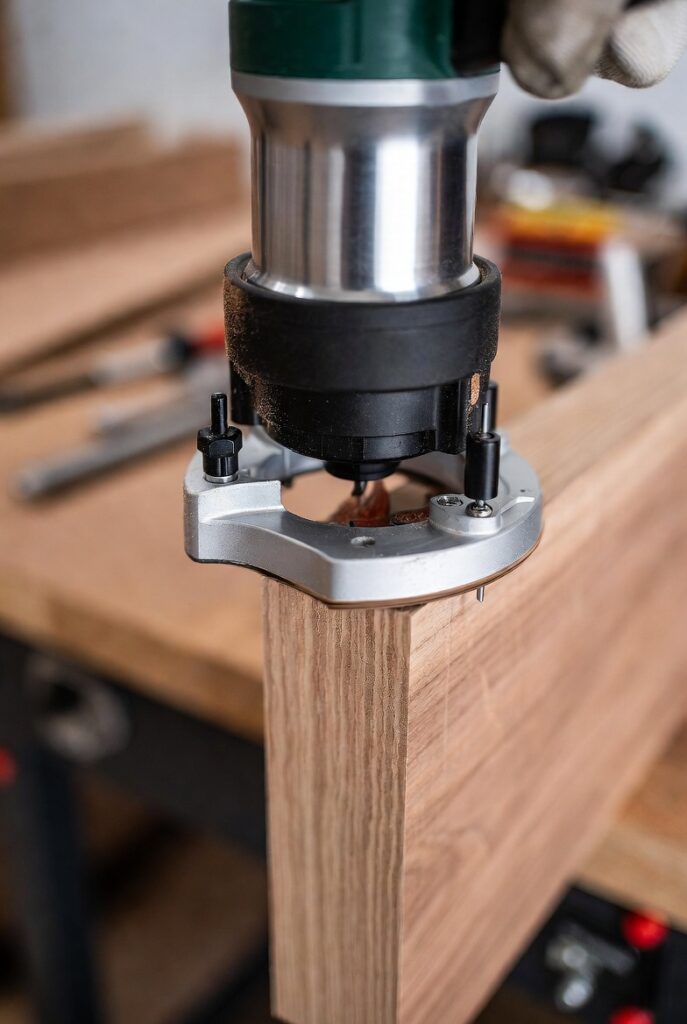
A trim router is one of the most versatile and useful power tools in any woodworker’s collection. Whether you’re shaping edges, cutting grooves, or trimming laminates, learning how to properly use a trim router is essential for precision and safety. This section will walk you through how to use a trim router step-by-step, even if you’re a complete beginner.
1. Understanding the Basics of a Trim Router
Before you start cutting, you need to understand what a trim router actually does. A trim router is a compact, lightweight version of a full-size router, designed for small routing tasks such as edge trimming, decorative cuts, and laminate work.
Key features of a trim router include:
- A small base for better control
- High-speed motor for smooth cuts
- Depth adjustment dial for precision
- ¼-inch collet for standard router bits
Unlike large routers, a trim router gives you more maneuverability and control, making it perfect for DIYers, hobbyists, and professional finish carpenters alike.
2. Preparing Your Trim Router for Use
Before using your trim router, always check that it’s properly assembled, clean, and adjusted. Follow these steps for setup:
- Unplug the trim router before inserting or removing bits.
- Select the right router bit (¼-inch shank) for your task.
- Insert the bit into the collet at least ¾ of the way in.
- Tighten the collet securely using the provided wrenches.
- Set the cutting depth using the micro-adjustment knob.
- Secure the workpiece on a stable workbench.
⚙️ Pro Tip: When using a trim router, always double-check the bit is tight before powering on — loose bits can damage your project or cause injury.
3. Safety Tips Before Using a Trim Router
Even though a trim router is smaller than a full-size router, it still spins at extremely high speeds — often over 30,000 RPM. Safety should always come first.
Safety checklist when using a trim router:
- Wear safety goggles and hearing protection.
- Avoid loose clothing or jewelry.
- Keep hands away from the spinning bit.
- Always move the trim router against the bit’s rotation.
- Make sure your cord or battery pack is positioned safely.
💡 Tip: Always start your trim router before touching the wood surface, and let it reach full speed before making contact.
4. Using a Trim Router for Edge Trimming
The most common use for a trim router is trimming laminate or wood edges. Here’s how to get clean, smooth edges:
- Clamp your board securely.
- Select a flush trim bit or chamfer bit.
- Hold the trim router firmly with both hands.
- Guide the router slowly along the edge, keeping the base flat against the workpiece.
- Maintain a steady pace — don’t rush the cut.
Pro Tip: Keep the trim router base pressed flat to avoid uneven cuts or gouging the wood.
🪵 “A steady hand and the right speed make the difference between a rough edge and a professional finish when using a trim router.”
5. Making Grooves and Inlays with a Trim Router
A trim router isn’t just for trimming — it can also cut grooves, dados, and inlays with precision.
To do this:
- Switch to a straight bit or spiral bit.
- Use a router guide fence or template for straight lines.
- Set the cutting depth precisely.
- Make multiple shallow passes instead of one deep cut.
⚙️ Pro Tip: Shallow passes help reduce tear-out and give you a smoother finish when using your trim router.
Applications:
- Cutting decorative grooves on cabinet doors
- Making sign engravings or lettering
- Creating inlay recesses for epoxy or veneers
6. Using a Trim Router for Decorative Edges
One of the most satisfying uses of a trim router is creating decorative profiles on edges. This gives furniture and cabinets a professional, finished look.
Common router bits for this include:
- Round-over bit: softens edges for a smooth curve
- Beading bit: creates elegant, rounded beads
- Chamfer bit: cuts clean, angled edges
- Cove bit: adds a concave groove along the edge
🪚 Pro Tip: When routing decorative edges, move your trim router in the correct direction — usually counterclockwise on the outside edges and clockwise on inside edges.
7. Controlling Speed and Feed Rate
Controlling the speed and feed rate of your trim router is critical for achieving clean results and avoiding burns or chatter marks.
- If the router moves too slowly, it can scorch the wood.
- If it moves too quickly, it can tear or chip the edges.
For most wood types, aim to let the trim router bit move smoothly without bogging down the motor. Listen to the sound of the motor — a steady hum means you’re using the right speed and pressure.
8. Maintaining Your Trim Router
To keep your trim router in excellent condition, follow these maintenance steps regularly:
- Clean the base and motor housing after each use.
- Check the power cord or battery for wear.
- Lubricate the depth adjustment knob if it feels tight.
- Replace dull bits immediately — sharp bits make cleaner cuts.
- Store your trim router in a dry, dust-free case.
⚙️ Maintenance Fact: A well-maintained trim router lasts up to 5–10 years of frequent use, while neglected ones often fail due to clogged dust or overheating.
9. Common Mistakes to Avoid with a Trim Router
Many beginners make mistakes that lead to rough cuts, burn marks, or damaged wood. Avoid these pitfalls:
| Mistake | Consequence | Fix |
|---|---|---|
| Forcing the trim router too fast | Tear-out or uneven edges | Slow down your feed rate |
| Cutting too deep in one pass | Burned wood or broken bit | Make multiple shallow passes |
| Using dull bits | Rough or splintered cuts | Replace bits regularly |
| Ignoring grain direction | Edge chipping | Route with the grain whenever possible |
⚠️ Warning: Never lift your trim router from the work surface until the bit completely stops spinning.
10. Finishing Your Work with a Trim Router
Once your routing work is complete:
- Turn off the trim router and wait for it to stop.
- Unplug it before changing bits or cleaning.
- Lightly sand the routed edges for a smooth finish.
- Apply a finish, oil, or paint as desired.
The result? A beautifully finished edge or groove — clean, precise, and professional-looking — all thanks to your trim router.
Final Thoughts: Mastering the Trim Router
Mastering a trim router takes practice, patience, and attention to detail. But once you understand how to handle it safely and effectively, your woodworking projects will improve dramatically.
Remember:
- Always set the correct depth.
- Keep your trim router clean and sharp.
- Use steady movements for smooth cuts.
- Let the trim router do the work — don’t force it.
✨ Quote: “The trim router may be small, but in skilled hands, it’s the most powerful precision tool in the workshop.”